
School boards propose different tax rates. Here’s what they could mean for taxpayers
The school districts’ final rates will be adopted in September.
Since You Asked is a reader-driven series that answers questions about our community. Have something you've always wondered about? Submit your question here.
GLASGOW, Ky. — School districts in Barren County are taking different approaches to property taxes this year. Since you asked, here’s what each district is proposing for the new fiscal year.
Barren County keeping same tax rates
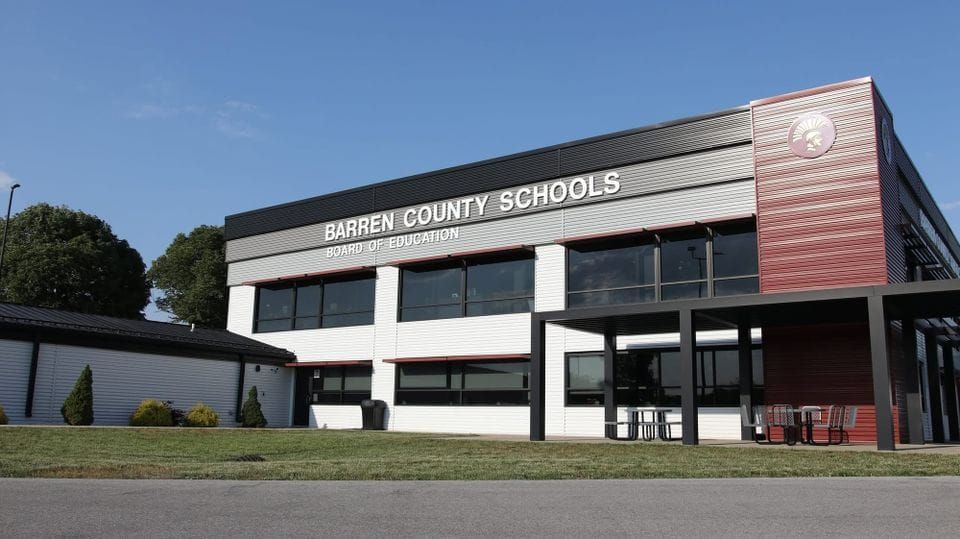
The Barren County Board of Education is proposing to keep its tax rates unchanged from last year at 62.6 cents per $100 of assessed value on real property and 67.4 cents on personal property.
The rates are the same ones levied by the district in fiscal year 2026, when they produced $13,588,776.72 in revenue.
The proposed rates are expected to produce $15,093,045.01, an increase of $1,504,268.29 over the previous year.
The district’s compensating rates for 2027 are 60.2 cents on real property and 67.3 cents on personal property. Those rates are expected to produce $14,570,575.61.
Barren County Schools said the additional revenue from the proposed rates would be allocated toward the cost of collections, building fund, instruction, transportation and maintenance of plant.
The district’s notice lists $41,367 for the cost of collections, $100,000 for the building fund, $1 million for instruction, $200,000 for transportation and $162,901.29 for maintenance of plant.
In a message accompanying the required notice, Chief Financial Officer and Treasurer Joe Murley said the board is proposing to keep the school tax rate the same as last year and that the proposal is not a rate increase.
The higher projected revenue is largely tied to increases in property values, according to Murley.
The $15.09 million figure represents the amount the rates would generate if all tax bills were paid in full. Murley said the district typically collects about 96% of what is billed and expects to actually receive approximately $14.49 million.
Murley also said the increase in local property values is expected to reduce the district’s state Support Education Excellence in Kentucky funding by an estimated $484,195.80.
Kentucky’s SEEK funding formula was created as part of the state’s 1990 education reform law, which followed a landmark lawsuit challenging disparities in school funding.
The formula takes into account local property wealth when determining how much state funding a school district receives. As local property values increase, a district’s calculated ability to raise money locally can increase, which can reduce the amount of state funding it receives.
“When assessments go up, the state funding goes down for school districts,” Murley said in an interview with Barrenside.
The board is expected to formally adopt the rates at its Sept. 10 meeting.
Glasgow proposing lower rate
Glasgow Independent Schools is proposing to lower its property tax rate from 79.1 cents to 78.5 cents per $100 of assessed value on real property.
The proposed 78.5-cent rate is the district’s compensating rate for the 2026-27 fiscal year. The rate is expected to generate approximately the same amount of revenue from existing property as the previous year after accounting for changes in property values.
The rate on personal property would remain at 80.9 cents per $100.
The district expects the proposed rates to generate about $7.81 million in General Fund property tax revenue, compared with about $7.36 million collected in fiscal year 2026.
The Glasgow school board is scheduled to meet Sept. 10 at 5:30 p.m. to formally adopt its tax rate.
Caverna considering higher rate
Caverna Independent Schools is taking a different approach.
The district’s compensating rate for 2027 is 71.2 cents per $100 of assessed value for both real and personal property.
The school board is proposing a rate of 74 cents for both real and personal property.
Caverna will hold a public hearing on the proposed tax levy Sept. 10 at 4 p.m. at the Caverna Central Office, 1106 N. Dixie Highway in Cave City.
The proposed rate is expected to generate $3,878,260.76 in General Fund revenue, compared with $3,678,993.88 generated by the tax levy in fiscal year 2026.
That represents an increase of $199,266.88 over the previous year.
Of that additional revenue, Caverna plans to allocate $154,285.21 toward instruction, $30,000 toward transportation and $10,000 toward maintenance of plant. Another $4,981.67 is projected for the cost of collections.
The district said $753,526.85 of the proposed revenue would come from new and personal property.
The proposed 74-cent rate would generate more revenue than the 71.2-cent compensating rate, which is expected to produce $3,732,286.69.
What is the compensating rate?
The compensating rate is calculated each year based on changes in property assessments. It is designed to produce approximately the same amount of property tax revenue as the previous year, subject to the state’s tax-rate rules.
For taxpayers, the rate can change from year to year even when a school district is not seeking to increase its overall property tax revenue through the compensating rate.
In Barren County’s case, the board is proposing to keep the same tax rates as last year rather than adopt the lower compensating rates.
Caverna, meanwhile, is proposing a rate above its compensating rate, which would allow the district to collect more revenue than it would under the compensating rate.
The school districts’ final rates will be adopted in September.