
Barren County leaders push jailer to admit statement about jail funds was misleading
A discussion over $400,000 in jail revenue exposed a larger issue with cash flow and communication.
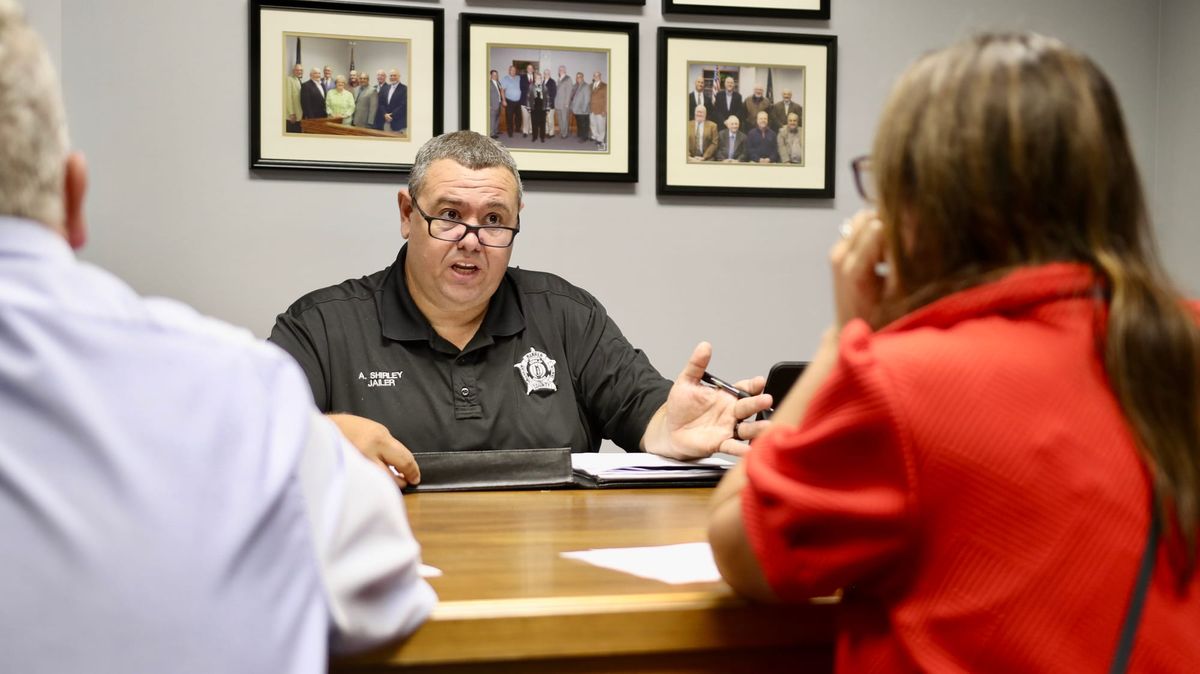
GLASGOW, Ky. — Barren County leaders cleared up a misunderstanding about jail finances Friday after a brief confrontation earlier in the week during a fiscal court meeting.
Jailer Aaron Shirley said the jail had collected and turned over approximately $400,000 to county government, but the judge/executive’s office said it did not have the funds at the time.
The exchange led to concerns in the community that the judge/executive’s office had mishandled the money. Shirley said Friday that was not his intention.
“I don’t want anybody to think, you know, that we’re not putting money in the accounts that are coming to this office,” said Judge/Executive Jamie Byrd.
What caused the confusion?
During the fiscal court meeting, Shirley was reading from a prepared table showing jail revenues, when they were received, the check date, the amount and the balance in the jail account.
Written below the table in ink was a notation that July deputy wages had not been received as of 3:30 p.m. Aug. 17. The notation also showed the jail had spent $331,553 between July 1 and Aug. 11.
Shirley said his records showed the jail had collected $402,579.
Byrd said she later reviewed a copy of the table Shirley referenced and discovered that two of the payments had not yet been collected. She did not have a copy of the table at the time of the meeting.
The issue came down largely to the difference between money the jail considered collected and money the county had actually received and deposited.
Some jail revenues, including state inmate housing fees, are sent directly to Byrd’s office through the mail rather than being deposited into the jail’s account.
Shirley said his understanding was that Treasurer Mandy Steger had all of the payments from the jail. He added that his office does not have direct access to the jail’s bank account, so it cannot always know when payments have been received.
“If it’s for July, we normally get a paper check in the mail, middle of the following month,” Steger said.
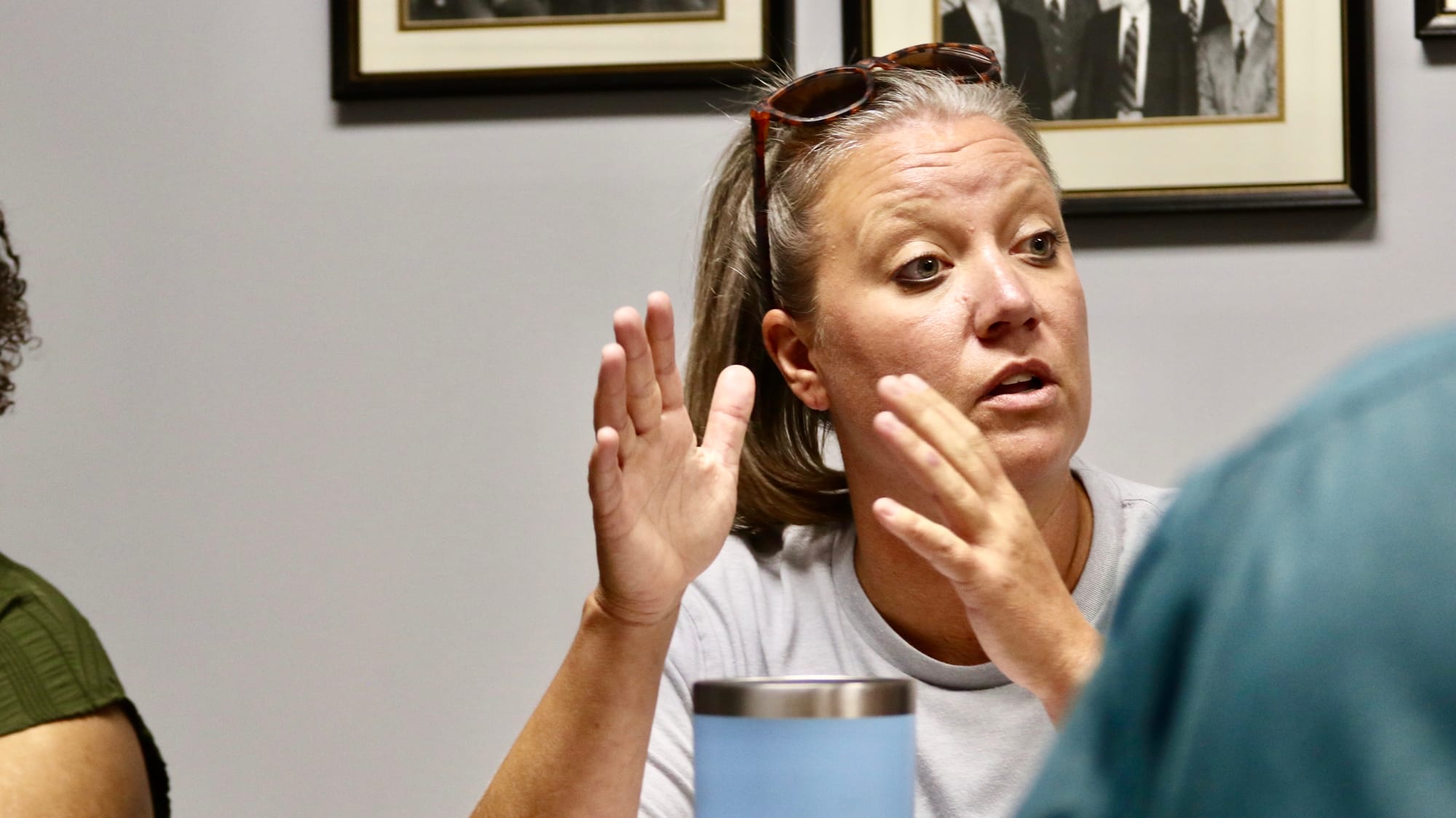
Byrd said she was confused by Shirley’s statement at the fiscal court meeting because she knew there was no money in the jail account and was not sure how he had concluded her office did not know where $95,000 was located.
“You said in court, in front of all those people, to make it look like mass panic, like it had already come and we didn’t know where it was,” Byrd said.
Byrd then asked Shirley whether he knew that some of the money listed on his table had not yet been received by her office.
“Did you know though that is said on the thing that you were looking at that it said had not yet received?” Byrd asked.
Shirley said he understood that some of the payments had not yet been received by the judge’s office. However, he did not make that distinction during the fiscal court meeting. Instead, he said the judge’s office had received about $400,000.
“I want that confirmed, Aaron, because that’s causing mass confusion in the community,” Byrd said. “Confirm that. That you knew on your paper that is said it had not yet been received.”
Shirley said his records showed the jail had collected $402,579.
“But you had not,” Byrd said. “Do you see what I’m getting at, Aaron?”
“What you did in court the other day made everything look as if — I mean it made us look like thieves up here and we were hiding money,” Byrd said.
“At least, it was misleading,” said Magistrate Marty Kinslow.
“That was not the intent,” Shirley said. “The intent was we got an appropriation that said that we had sent $331,000.”
Shirley then began reading what the jail had collected, but Byrd said the money had not yet reached her office.
“Based on your appropriation, you spent $331,000 plus that payroll that week that was not in there,” Byrd said. “You’d only turned in $292,000.”
“It’s all gotten blown out of proportion anyway,” Shirley said.
“It shouldn’t have never been said in court like that,” Byrd said. “Please admit that.”
“Yes or no?” Kinslow said.
“Well, it probably shouldn’t’ve,” Shirley said.
The bigger issue: cash flow
The discussion then turned to a broader concern Shirley has raised about how the jail tracks its available money.
Shirley said he reviews a financial report provided by county government each month to determine how much money remains in each jail budget line item. He uses those figures to make spending decisions.
But the amount the jail has recorded as collected is not always the same as the amount actually available in the bank account.
If a payment has been recorded as collected but has not yet reached the county’s account, Shirley could believe money is available for a purchase when the funds have not yet been deposited.
That cash-flow issue has contributed to situations in which the jail has exceeded its budget and county government has had to transfer money from the general fund to cover expenses, officials said.
“I was getting at this is how much money that we have billed people for that has been turned over to the county to use for our bills,” Shirley said. “I’m trying to keep you from having to transfer.”
“When we transfer the money, we never get it back because we’re not able to get it back because the bills are just continuing,” Byrd said.
Access to financial information
Shirley also raised concerns about his ability to see the jail account’s current balance.
Shirley said his office does not have direct access to the jail account and had asked for bank statements covering several months.

Steger said the original bank statement is kept in a safe in her office and that Shirley has always been allowed to come review it, but the physical statement is not given to him.
Steger said the practice is intended to protect the integrity of the financial records, particularly for audits.
She offered to provide Shirley with monthly reports after the bank accounts are reconciled.
“I’ll give you a receipt that shows everything that’s been deposited into your bank account and everything that’s come out of your bank account, whether it be a utility, health insurance payment,” Steger said.
Shirley continued to ask whether those reports would show the account balance.
Steger said the balance changes from day to day as new debits and credits occur, so a report would not necessarily show the exact balance at any given moment.
“It’s not good business that you expect all of your funds are available every day from day one. We’ve asked you to look at it that way, and that’s not the way that it’s been worked with on our end, and I’m a little tired of it to be honest,” Kinslow said.
“How can I stay in the parameter of what’s in the account if I have no idea what’s in the account?” Shirley said.
Byrd asked Steger to notify Shirley when she receives a check and makes the deposit so he has a better understanding of the jail’s cash flow.
Most revenues collected by the jail go directly to the judge/executive’s office rather than the jail.
Monroe County sends its monthly inmate housing check to the jail, which is hand-delivered to the treasurer. The check was delivered Aug. 18 this month but had not been deposited as of Friday because Steger had been at a state conference.
“It all comes back to communication at the end of the day,” Shirley said.
The Jail Committee meeting was held about 30 minutes before the county’s hearing on the proposed property tax rate, so discussion was brief. The meeting began about six minutes late because Byrd had just gotten off a call.
The jail committee agreed to continue the discussion at its monthly meeting in September, scheduled for Sept. 21.