
Cheryl Berry Ambach remembered as trailblazer who changed local legal landscape
An oral history and colleagues’ memories reveal the legacy of one of Barren County’s pioneering attorneys.

GLASGOW, Ky. — When Cheryl Berry Ambach arrived in Glasgow in 1974 after graduating from law school, the legal profession looked much different than it does today.
Women were beginning to enter courtrooms in greater numbers, but they were still stepping into a profession where they often had to prove they belonged.
Ambach became the first woman to practice law in Barren County, entering a courthouse where no woman had stood in her role before. Over the next five decades, she helped reshape the local legal profession for the women who followed.
Following Ambach’s recent death, former colleagues and members of the local legal community are reflecting on a career that helped reshape the practice of law in Barren County.
Their reflections are paired with Ambach’s own recollections from an oral history interview conducted before her death by family friend Dr. Amanda Wray of UNC Asheville, where she shared the unlikely path that led her to the courtroom.
A path she never expected
Ambach initially set out to pursue nursing after working as an aide and seeing the realities of medical care firsthand. She recalled a time when young women could receive minimal training before being placed in charge of caring for patients.
“We were let loose on that poor group of people,” Ambach said. “But medical care was so different at that time.”
When she arrived at the University of Louisville for orientation, she learned the nursing program she intended to pursue did not exist.
Her father had given her three years to complete a degree and told her he would not pay tuition beyond that point. Looking for another field she cared about, Ambach turned to French studies.
“So the next thing that I do that would get me out in three years, that I cared anything at all about, was a French degree. So that’s how I ended up having to major in French,” she said.
The decision became a lifelong connection. Her family later remembered her excitement during the 2024 Paris Olympics, when she would sing the French national anthem each time France won a competition.
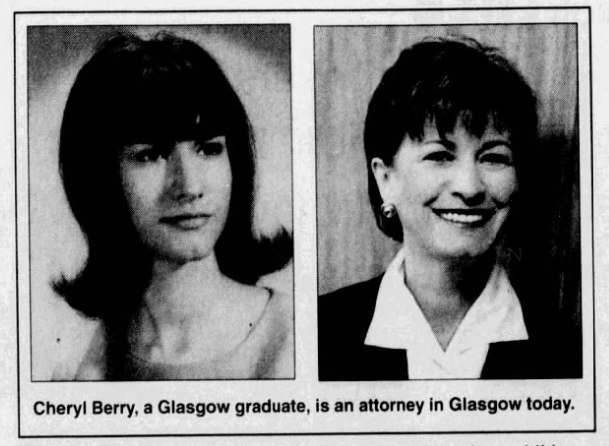
After graduating, Ambach spent a year working as a social worker in Louisville. The experience exposed her to poverty and hardship she had never encountered before.
“And I had no idea what abject poverty was until I was in a house one day that was barely standing up, and a mouse ran across the floor,” Ambach said. “So having been the social worker and seen what some children are living in, well it was just heartbreaking.”
It was during that time her father encouraged her to pursue another path — law school.
Ambach applied, was accepted and entered a profession where women remained a rarity. She was one of fewer than 10 women in her law school class, surrounded primarily by male classmates and professors.
She remembered one professor who made that divide unmistakably clear.
“And one day in class he said, ‘All right, now, boys.’ And he looked at each girl in the room as he said it, there were either two or three of us in that class. And then he completed his sentence. Just kind of made me want to throw the book at him, you know?”
After graduating and taking the oath of office as an attorney on May 8, 1974, Ambach entered a profession that would test more than her legal knowledge.
Entering a profession built for men
One of her earliest courtroom experiences came in Green County, where she arrived wearing a white pantsuit, blazer and heels while representing a client.
As she waited for the case to be called, she noticed other attorneys appearing before her. Finally, the judge called her case.
“And I go up there and the judge leans out over the bench and looks down at the floor, and looks back up at me and says, ‘Did you wear those pants in Judge Jimmy Carter’s court?’”
At the time, women attorneys often faced expectations that extended beyond their legal abilities. Traditional views about courtroom appearance and questions about whether women belonged in certain areas of law remained common.
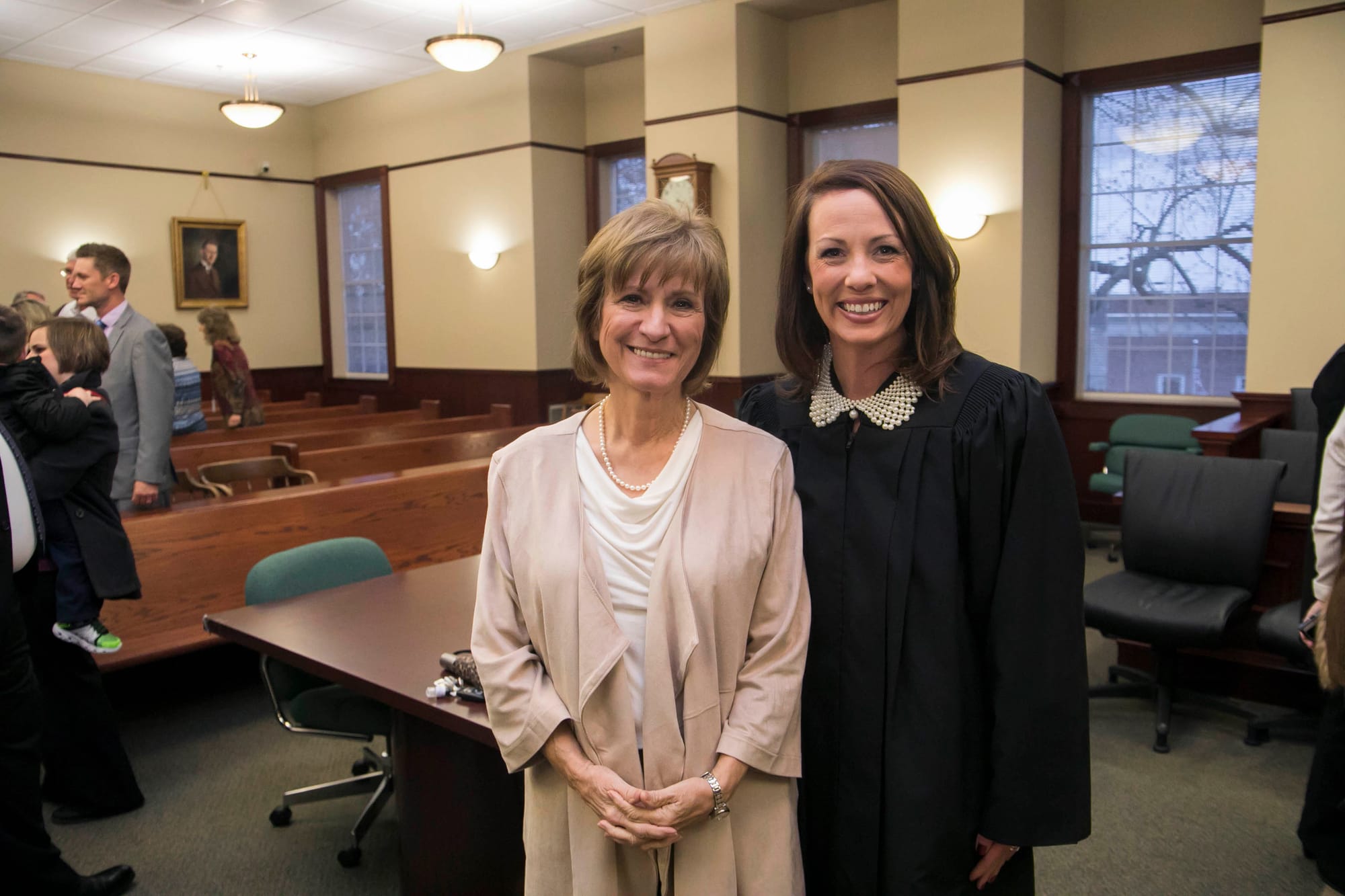
By the time Family Court Judge Mica Pence attended law school, women made up nearly half of her graduating class.
Pence credits attorneys like Ambach with helping make that possible.
“She really opened things up,” Pence said.
Before becoming partners, Pence first met Ambach from across the courtroom.
One of Pence’s earliest memories came during a family law case in which her client failed to appear for court. Despite that, she argued the case as best she could.
Afterward, Ambach approached her.
“Cheryl afterwards came to me and said: ‘You did a great job for having no client and no case.’ And then, of course, she ended up asking me to practice with her.”
The two would practice together for seven years.
Pence said Ambach quickly developed a reputation for being thoroughly prepared and exceptionally bright.
“She’s going to know what she’s talking about and do so convincingly,” Pence said.
“Cheryl’s one of the smartest people I’ve ever known. I mean, in all ways.”
Outside the courtroom, Ambach’s intelligence became something of a local legend.
Pence recalled Ambach dominating the Barren County Bar Association quizz bowl team alongside Charlie Goodman and Tim Gillenwater. She was equally successful calling into WCLU trivia contests.
“WCLU had to start making a rule about how many times you could call in and win a trivia question because she would call in and win every day,” Pence said.
The prize often included a Long John Silver’s coupon, which Pence said became a weekly family tradition.
Pence said Ambach combined that intelligence with professionalism and determination.
“She was super, super smart but not necessarily accepted as a female in her field,” Pence said. “Cheryl was brilliant, and she was very, very witty, very quick thinking, and very professional. She was always very classy and very well put together.”
A fierce advocate
Brian Pack, who has practiced law in Glasgow since 1994, often found himself representing clients against Ambach in family court.
Although they were opposing counsel, he said she earned widespread respect throughout the legal community.
“I saw her to be a very skilled practitioner. She would advocate very strongly for her clients, but do so with a strong ethical standard.”
Pack said Ambach understood that family law often involved people experiencing some of the most difficult moments of their lives.
“She was able to help people when they were at the lowest of their life, whether it’s a divorce, a custody battle of some sort, or child support, whatever. She was right there with them.”
In 2019, she was recognized as CASA of South Central Kentucky’s Guardian ad Litem of the Year for her work representing children in the court system.
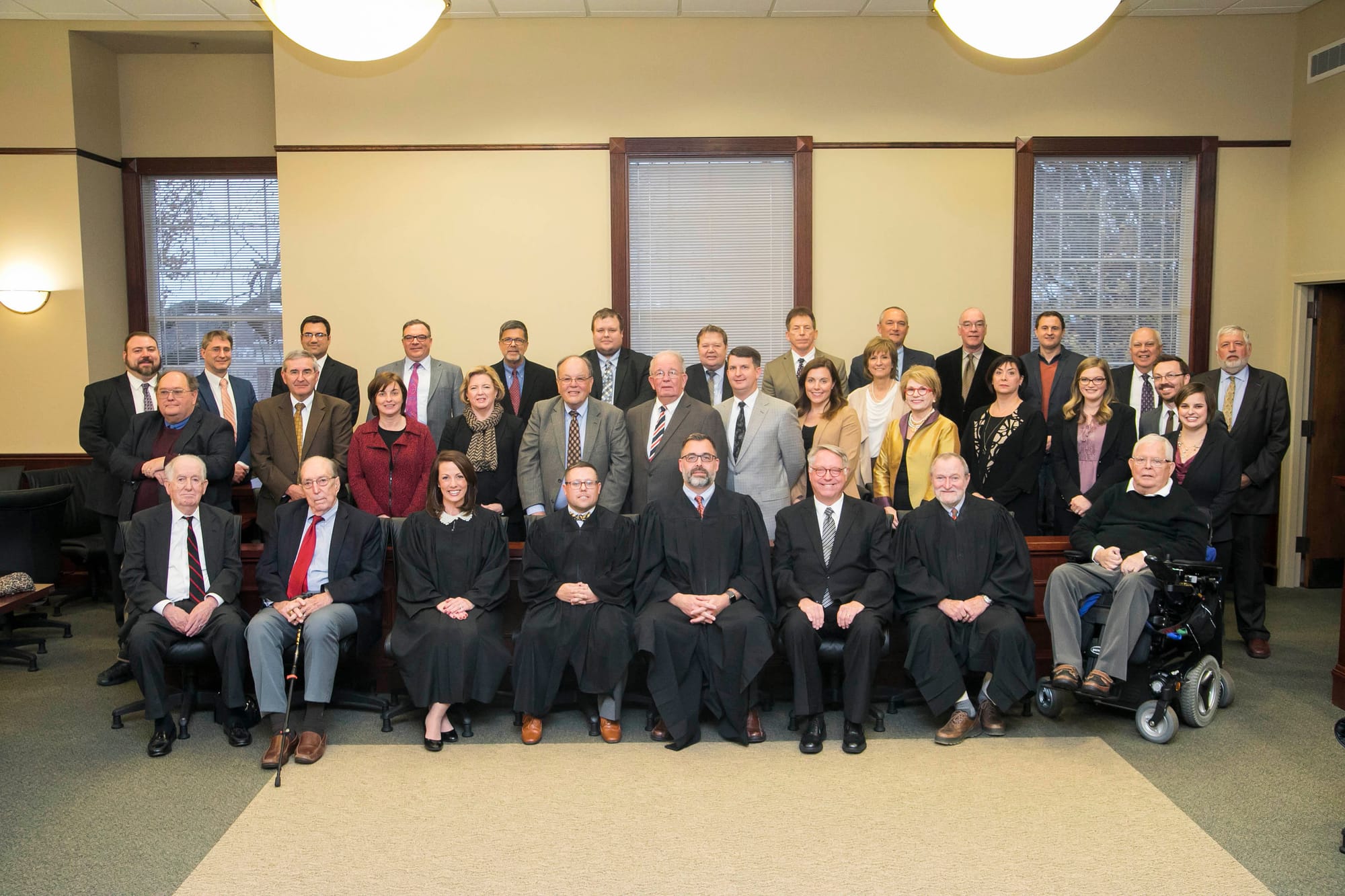
Her work earned recognition, but colleagues say her greatest contribution was opening doors for generations of women who entered the profession after her.
“She was very fierce in the courtroom,” Pence said. “That’s who you wanted on your side if you were getting a divorce or going through family law.”
Yet Pence said Ambach also taught younger attorneys to think beyond simply winning cases.
“She was the one who taught me to look for alternative solutions,” Pence said.
That approach changed how Pence viewed family law.
“She really helped me see how big of a change I could make in people’s lives and family law.”
A life of public service
Ambach’s public service extended beyond the courtroom. In the 1980s, she served on the governor’s workers’ compensation task force while continuing her legal practice in Glasgow.
She also sought public office, hoping to become Barren County’s first female judge.
She remembered campaigning for her father as a child when he ran for county attorney, an experience that sparked her own interest in politics.
“And the campaigning, I loved it. I mean that getting to be out there with all those people and talking and having them tell me how cute I was and all that nonsense,” she said. “I just loved it.”
A lifelong Democrat, Ambach said her political views were shaped by her parents, who admired Franklin D. Roosevelt for leading the nation through the Great Depression and World War II.
Her grandparents, she recalled, were Republicans because they viewed it as the “party of Lincoln.”
She believed civic participation remained essential.
“Sitting at home and not voting doesn't have power, that's for sure,” she said. “It feels like it's such an obvious thing that if you don't vote, then well, you shouldn't get to complain about things.”
Although Ambach never became a judge, colleagues say she left an enduring mark on Barren County’s legal community.
Ambach died July 7 after a two-year battle with cancer. She was 78.
Despite a career filled with firsts, she rejected the idea that she was extraordinary.
“I’m just an ordinary person,” she said.
Those who worked beside her remember something different: an attorney whose intelligence, preparation and compassion changed the local legal profession for the attorneys who followed.
Perhaps her legacy is best reflected in the advice she hoped to leave her children.
“It never hurts to be kind to somebody. And if you can see good to do, do it.”