Barren County considers breaking away from joint tourism agency
If Barren County creates its own commission, the county would have four tourism commissions, more than any other county in Kentucky.
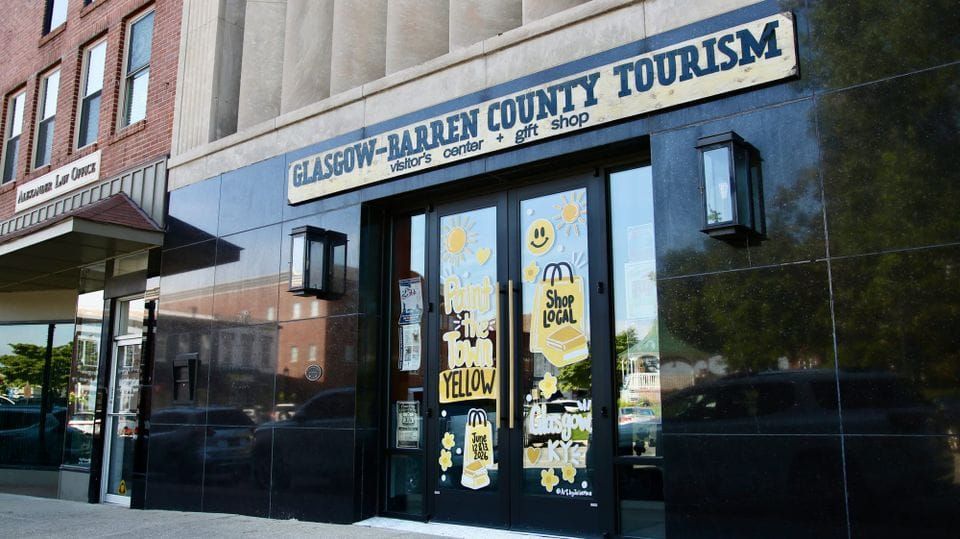
GLASGOW, Ky. — Barren County officials are considering ending a 27-year partnership with Glasgow that jointly oversees tourism promotion, saying a separate county tourism agency would generate additional revenue to support the county's growing tourism industry.
Barren County Judge/Executive Jamie Byrd said the county is in discussions with the Glasgow-Barren County Tourist & Convention Commission about creating a stand-alone county tourism commission. No final decision has been made.
The City of Glasgow and Barren County established the joint commission in 1999.
Today, tourism in Barren County is promoted through three separate commissions: one serving Cave City, one serving Park City and the joint Glasgow-Barren County Tourist & Convention Commission.
If Barren County creates its own commission, the county would have four tourism commissions, more than any other county in Kentucky.
Byrd said the proposal is driven by anticipated tourism growth, including the planned agricultural exposition center next to the Cave Area Conference Center in Cave City and the possibility of another hotel.
“What happens, for example, when you stay in Barren County right now, Barren County gets no income from Cave City at all,” Byrd said. “It wouldn’t take away from Cave City, it would be more money on top of it that you could use for tourism.”
Byrd said creating a separate county tourism commission would allow Barren County to levy its own transient room tax.
Under Kentucky law, local governments may impose a 3% transient room tax to fund a tourism commission, along with an additional 1% tax to help cover the operating expenses of a convention center.
Byrd said Barren County would qualify for the additional 1% because of the Cave Area Conference Center in Cave City.
“If it’s its own entity, you can make it 4% because we have a convention center,” Byrd said.
MacLean Lessenberry, executive director of the Glasgow-Barren County Tourist & Convention Commission, said the proposal came as a surprise.
“I was definitely surprised that she has floated the idea of taking tourism in-house and it is my understanding that it would be solely due to the county needing the money,” Lessenberry said.
According to Lessenberry, the joint commission is a quasi-governmental entity funded through a 3% transient room tax collected within the jurisdictions of Glasgow and Barren County, along with grants. She said it receives no funding from either local government’s general fund.
Byrd said the additional lodging tax revenue would help the county prepare for larger tourism events expected to come with the agricultural exposition center.
“We’re gonna have to be advertising for events, and you know, having backup plans for issues with on-site improvements and stuff life that,” she said.
She said another hotel is also planned for Cave City, though plans have not been finalized, and the county wants to be prepared for continued tourism growth.
Byrd said she does not envision hiring several people to staff a county tourism commission. Instead, she said Brian Pickerel, who currently works with county government in a marketing capacity, would oversee the agency.
Lessenberry said splitting the commission would reduce its operating budget by nearly 50% and divide a collaborative tourism strategy built over more than 25 years.
Under the proposal, she said, the existing commission would continue promoting attractions and hospitality businesses within Glasgow’s city limits, while businesses elsewhere in the county would become the responsibility of a new county tourism commission.
She said those businesses would also lose representation through regional partnerships currently coordinated by the joint commission, including the Caveland Marketing Association, the Southern Kentucky Film Commission and Cave Country Trails.
“My concern is not only that dividing the commission would weaken that model at a time when it is producing measurable results for businesses throughout both Glasgow and Barren County, but that it also divides the industry between city and county lines,” Lessenberry said.
Byrd said the county already helps support events that draw visitors, but those efforts are funded through the county’s general fund, which is supported largely by property taxes.
She said a separate county tourism commission would allow more tourism-related expenses to be paid with lodging tax revenue generated by visitors instead.
“That’s tourism dollars, and we want to make sure that those are not taxes in regards to property taxes,” she said.
She said the proposal is intended to complement, not compete with, the existing tourism commissions.
“It’s not competing. We want to bring in more opportunity. We want to bring in more income, and this is going to be a tax on individuals that are coming into our community,” Byrd said.
Lessenberry said visitors spent $117.5 million in Barren County in 2025, underscoring tourism’s economic impact on the community.
“One of the biggest misconceptions about tourism is that it’s simply social media marketing or event promotion,” Lessenberry said. “In reality, it’s a strategic economic development effort built on relationships, market research, data-driven decision-making, and long-term planning.”
She also noted that transient room tax revenue is governed by Kentucky law, with statutory requirements governing how those funds may be spent and reported.
Byrd pointed to Paducah and Frankfort as examples of communities that have separated their city and county tourism operations.
“Their counties and their cities were combined tourism, but they separated in order to bring in more income for tourism,” Byrd said.
Byrd said county officials are reviewing the joint commission’s current budget to better understand how a separation would affect its operations.
She said some events currently funded by the joint commission, such as fishing tournaments, would likely become the responsibility of a county tourism commission rather than reducing Glasgow’s tourism budget.
“We’ve been trying to get it to where it doesn’t hurt, and this is a positive thing,” she said. “It’s more income that we can bring in from people passing through our area that we’re bringing.”