
Glasgow signal under review but records show likely outcome
In a February 2026 memorandum, district traffic engineers requested approval to study, and ultimately remove, the signal, stating the intersection could be converted to an all-way stop.
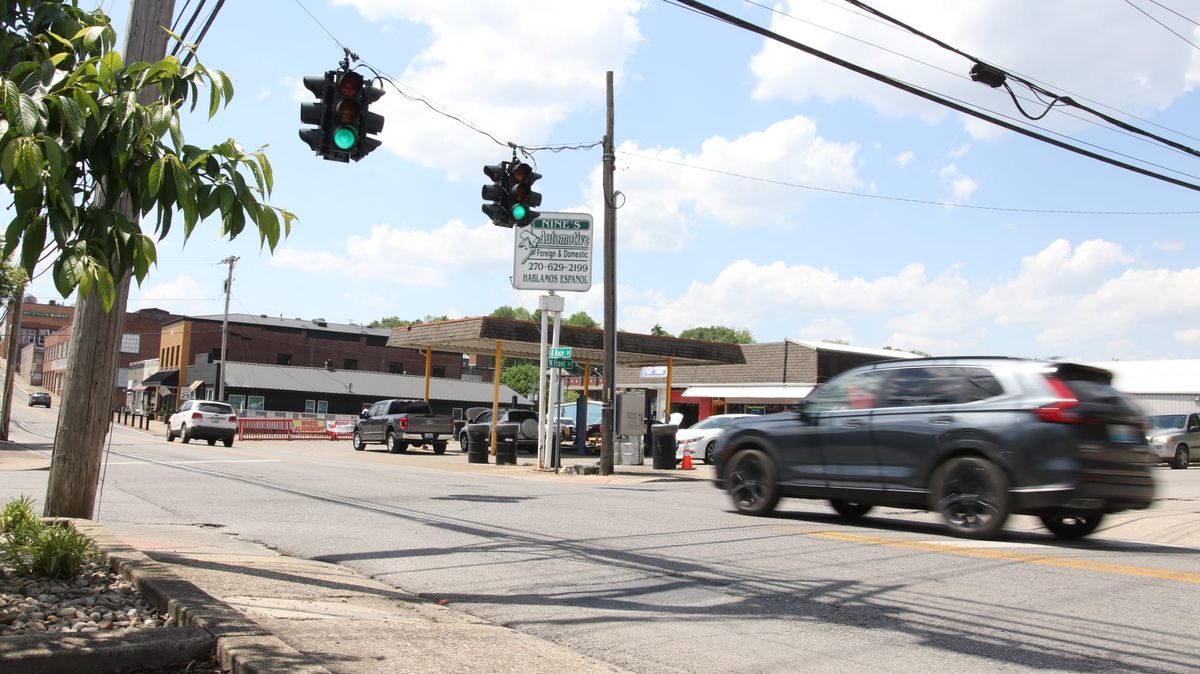
GLASGOW, Ky. — A Glasgow intersection is now operating as a four-way stop as part of a state-led study, but newly obtained records show transportation officials were already considering removing the signal before the evaluation began.
The intersection of North Race Street and West Front Street was converted April 30, with the traffic signal set to a flashing red in all directions. Drivers must now stop before proceeding.
The change is part of a 90-day study by the Kentucky Transportation Cabinet to determine whether the signal is still warranted or if a different traffic control, such as an all-way stop, would improve safety and flow.
“Preliminary data shows intersection traffic counts no longer meet federal guidelines for a signal,” KYTC District 3 said.
Documents obtained by Barrenside through an open records request show the state had already begun moving toward that conclusion.
“The District would like to make the intersection an all-way stop condition,” said Jeremy Stauffer, a traffic engineer with KYTC District 3 in Bowling Green, in a letter to Logan Baker with the KYTC Division of Traffic Operations.
D-3 Barren US 31EX @ Front St Traffic Signal Removal by brennan.crain
In a February 2026 memorandum, district traffic engineers requested approval to study, and ultimately remove, the signal, stating the intersection could be converted to an all-way stop.
The review was initially triggered by utility work requiring relocation of the pole supporting the signal, but engineers used the opportunity to reassess whether the traffic light is still justified.
That analysis found the intersection does not meet standard “signal warrants,” the federal guidelines used to determine when a traffic light is necessary.
Traffic counts collected by the state show roughly 7,300 vehicles travel through the intersection daily, with peak hourly volumes reaching around 800 vehicles. Those levels fall within a range where transportation guidance indicates a four-way stop can operate safely, particularly at lower-volume intersections.
According to state guidance reviewed by Barrenside, intersections with fewer than about 7,500 vehicles per day on each roadway can typically function under all-way stop control, with even stronger safety performance when volumes are below 5,000 vehicles per day.
Intersections with traffic counts near or below 4,000 vehicles per day per approach often operate effectively without signal control, according to state guidance.
Engineers also reviewed three years of crash data at the intersection as part of the study. While crashes have occurred, records do not indicate a pattern severe enough to require a traffic signal, and research shows converting to all-way stop control can reduce certain types of collisions at lower-volume intersections.
“When everyone is expected to stop, there is less likelihood of a high impact crash occurring,” said Chief District Engineer Joe Plunk, replying to concerns on a recent Facebook post. “And even if someone runs a stop sign, the likelihood of the opposing direction also running the stop sign full speed is highly unlikely.”
For now, the intersection is being treated as a four-way stop, and drivers are urged to use caution as traffic patterns adjust.
The Kentucky Transportation Cabinet District 3 did not respond to a request for comment on the recent changes at the intersection, and it remains unclear how the state plans to monitor it.
Have something you think Barrenside should investigate? Email us at news@barrenside.com.