Never too soon to harvest family history
A faded porcelain photo on a century-old headstone leads two brothers on a journey through Nobob to reconnect with a forgotten family story before more history is lost.
My brother and I are at the gravesite of Jabez Andrew Williams (1888-1918) in a Nobob cemetery. Our attention is focused on the small porcelain photo attached to the headstone. Uncle Andrew’s likeness has faced the sunrise of almost 40,000 mornings and remains clear enough for us to detect a dimple in his chin.
“Mom had a dimple like that,” brother Larry remarks, and then adds, “and you do, too.”
We’ve come here to discover something about this rather unknown relative in hopes we might understand more about ourselves. We know Uncle Andrew was our granddaddy’s older brother who was a Sargent and succumbed to flu at an Arkansas Army camp. That’s about all we know.
We’re also in Nobob today to meet with Jennifer Moonsong. She lives nearby and has been writing a book slated for publication next spring. The book will present a history of people who have lived in this little area where the counties of Metcalfe, Monroe and Barren merge.
 Brennan Crain
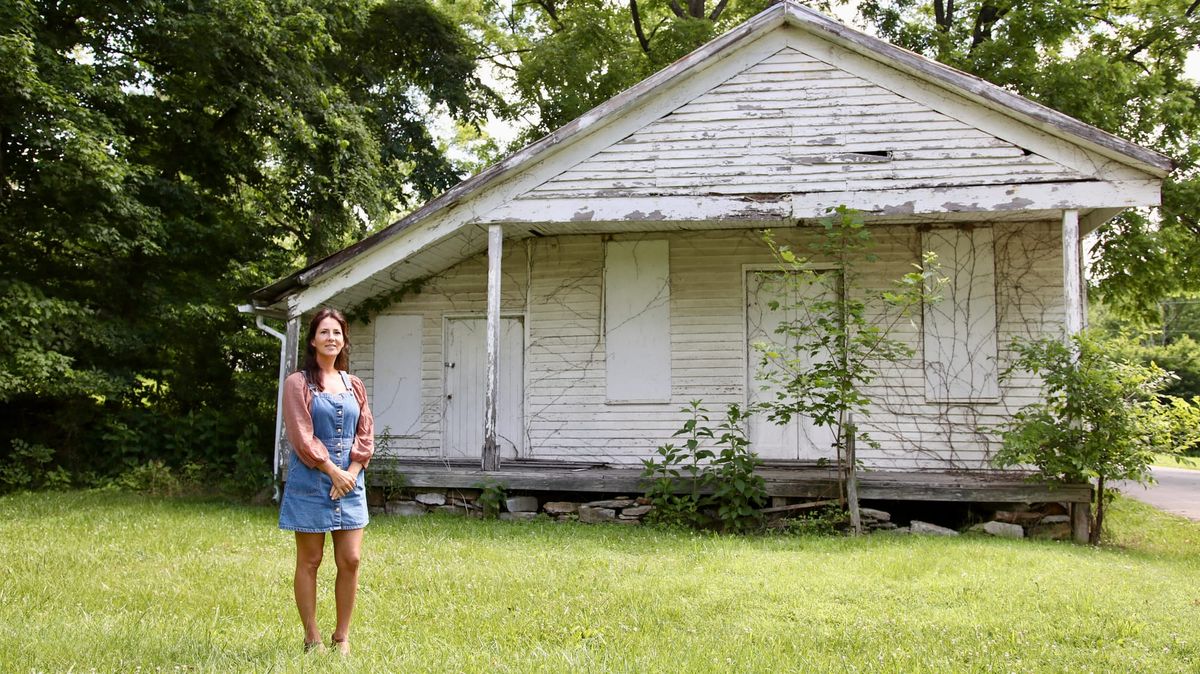
Jennifer’s Walker family and our Williams and Quigley families were neighbors during the early years of the twentieth century.
“You know why the headstones all face the East, don’t you?” Larry asks, then answers before I can respond. “Because they will face the light for the Resurrection.”
“What would happen if headstones faced West?”
“I guess you could turn around when you’re raised from the dead.”
While we wait for Jennifer, I confess to my 15-years-younger brother, “I should have talked with granddad about Andrew. He must have been a teen-ager when his brother left their Nobob home to join the Army during World War I. Granddad could have described our uncle’s personality, his talents, his faith — perhaps he could have offered anecdotes to help us appreciate who Andrew was. Then he’d be more to us today than simply in this picture. Granddad died when you were a toddler, but I could have talked to him back then.”
Larry nods, “Yeah, every generation is just one generation away from losing its family history.” He may have heard that line used by someone else, but it’s true. I neglected opportunities to collect Andrew’s history before Granddad and other family members of that generation slipped away.
When Jennifer joins us, Larry gives her an old photograph made in Nobob before our granddad was born. Jennifer examines the several members of the Quigley and Williams families posed together. “This is the first time I ever saw a picture of the Quigley family — it makes sense.” She says she now realizes how the two families were connected.
Calvin Wiley soon stops by and takes the four of us in a vehicle equipped with what must be the strongest shocks available in the entire transportation industry. We go off road into what is sometimes rugged terrain through fields and small paths where early Nobob dwellers lived and worked and are now buried.
We stop at a spot of particular interest. On the right is a small patch of land where our mother lived as an infant. The house is long gone, but we try to picture it as it must have been back then. Off to the left is where Jennifer’s grandfather, Sam Walker, lived. She tells us about her fiddling banjo playing and blacksmith working grandfather who was a special presence there.
Nobob’s history is fascinating, and our tour with Jennifer and Calvin is certainly enlightening. It’s good that Jennifer is gathering information from older folks while their memories are still available for harvest.
Her forthcoming book will have something to offer a generation yet to follow with a better understanding of their ancestors.
Maybe she will even present information concerning our Uncle Andrew.