
What to know about Barren County’s proposed zoning ordinance
In an interview with Barrenside, Planning and Zoning Director Kevin Myatt explained key aspects of Barren County’s proposed zoning ordinance.
What you need to know:
- The Joint City-County Planning Commission is scheduled to vote Monday on whether to recommend Barren County’s first countywide zoning ordinance.
- The proposal would establish 10 zoning classifications for unincorporated areas of the county, setting rules for land use and development.
- The ordinance outlines permitted and prohibited uses, property development standards and provisions addressing high-intensity technological infrastructure, including data centers.
- If recommended by the commission, the proposal would go to Barren County Fiscal Court for consideration and would need its approval to take effect.
GLASGOW, Ky. — The Joint City-County Planning Commission is scheduled to vote Monday on whether to recommend a proposed zoning ordinance for Barren County, which would establish land-use regulations for unincorporated areas of the county.
The proposed ordinance aims to manage growth while preserving Barren County’s agricultural heritage, protecting property rights, supporting economic development and safeguarding public health and safety.
If adopted, the ordinance would require new construction, changes to existing structures and divisions of land in unincorporated Barren County to comply with the regulations established for each property’s zoning district.
“This is one of the biggest pieces of legislation Barren County’s going to have for a long time,” said Kevin Myatt, executive director of the Joint City-County Planning Commission.
The proposal would establish 10 zoning classifications for unincorporated areas of Barren County, while leaving cities with their own regulations unaffected. It also addresses high-intensity technological infrastructure, including data centers, and includes maps showing existing and proposed land uses.
The proposal is scheduled to go before the full commission nearly three months after county magistrates voted to begin developing a countywide zoning framework. A Land-Use Committee was subsequently appointed to oversee the drafting process.
“This isn’t the Planning Commission doing it on its own accord,” Myatt said. “The fiscal court asked the Planning Commission to write this and to present something.”
Public input shaped the proposal
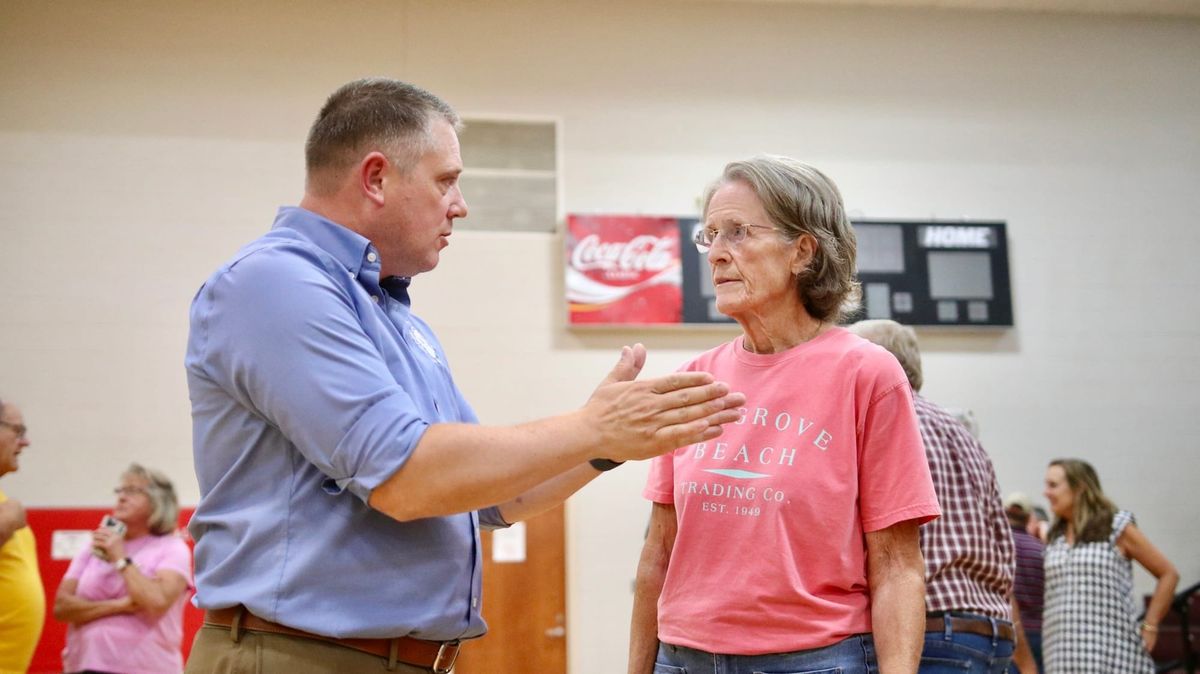
Throughout July and August, Barren County leaders held four public listening sessions across the county to gather community input. Residents could also submit feedback through a drop box at the Barren County Government Center or by emailing a dedicated address.
 Brennan Crain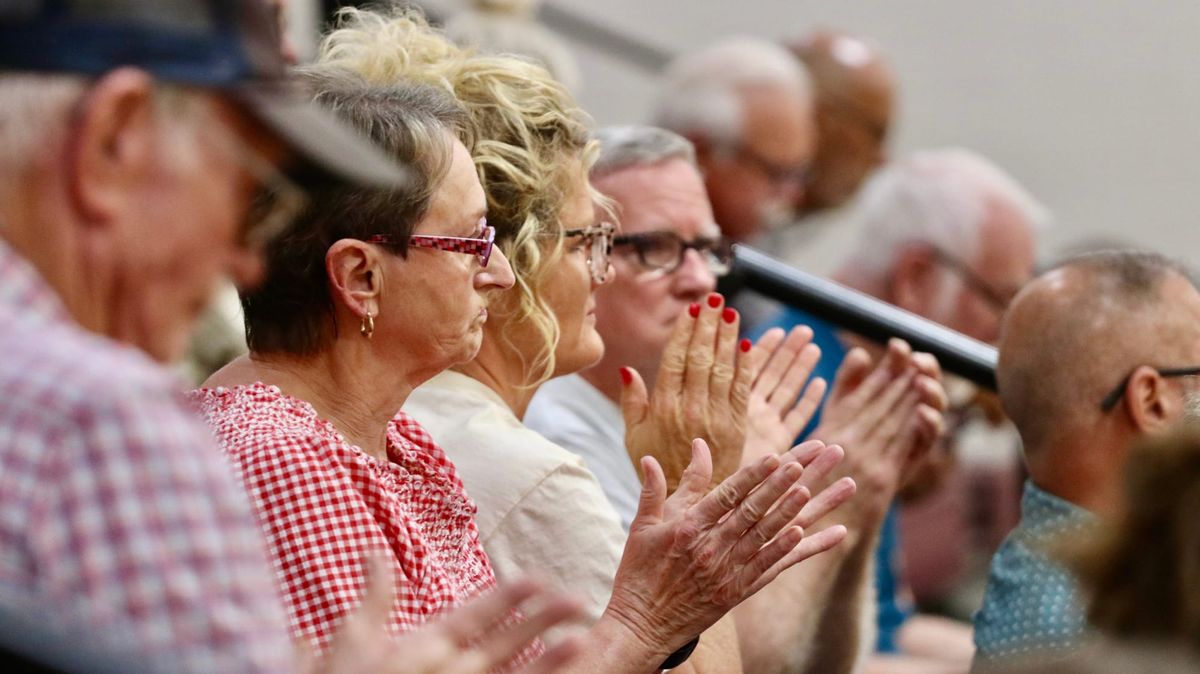
Magistrates voted to ask the JCCPC to begin drafting a comprehensive zoning framework before the listening sessions concluded. The Fiscal Court will have the final say on whether to adopt the ordinance.
“If this is passed by the fiscal court, then, at that point, you at least have a voice to be able to make heard in a legal, judicial setting,” he said.
Myatt said feedback gathered during the meetings helped shape the proposal, though not every suggestion could be accommodated.
“We took those questions into consideration. Some of those, some comments, were not feasible,” Myatt said.
Three residents submitted feedback on the proposed ordinance, Myatt said, while no comments were submitted through the drop box. Several people also spoke at meetings held in Austin Tracy, Hiseville, Park City and Temple Hill.
What does the proposal say about data centers?
The proposed ordinance includes a section dedicated to High-Intensity Technological Infrastructure, commonly known as HITI, which covers developments such as data centers.
Some residents called for a ban on data centers in Barren County, a request Myatt said could not be completely accommodated. The concerns come as Cave City faces litigation after enacting a one-year moratorium on data center development, despite having an existing framework for regulating such facilities.
“Legally, we can’t write that in that sense, OK? But we tried to formulate a plan, or at least a document that would reflect how constrictive it could be, while still allowing for a use to get through,” Myatt said.
 Brennan Crain
Under the proposal, these developments would be restricted to heavy industrial areas and classified as conditional uses. That designation would require them to go before a Board of Adjustment in addition to the standard review by the Planning and Zoning Commission.
“That avenue still allows for them to go forward. It’s just they may have a bit more hoops to have to jump through,” Myatt said. “We haven’t restricted it that they can’t be in this county. They do have avenues to get through.”
Myatt said HITI developments were specifically addressed in the ordinance to clarify how they would be regulated when projects are proposed in Barren County.
He added that such developments warrant a more thorough review because of their potential demands on local infrastructure and utilities.
“It’s because of what all they bring with them: utility usage, in all manner of facets, water, sewer, electric,” Myatt said. “All of that has to be brought into it.”
Most of the county designated rural residential
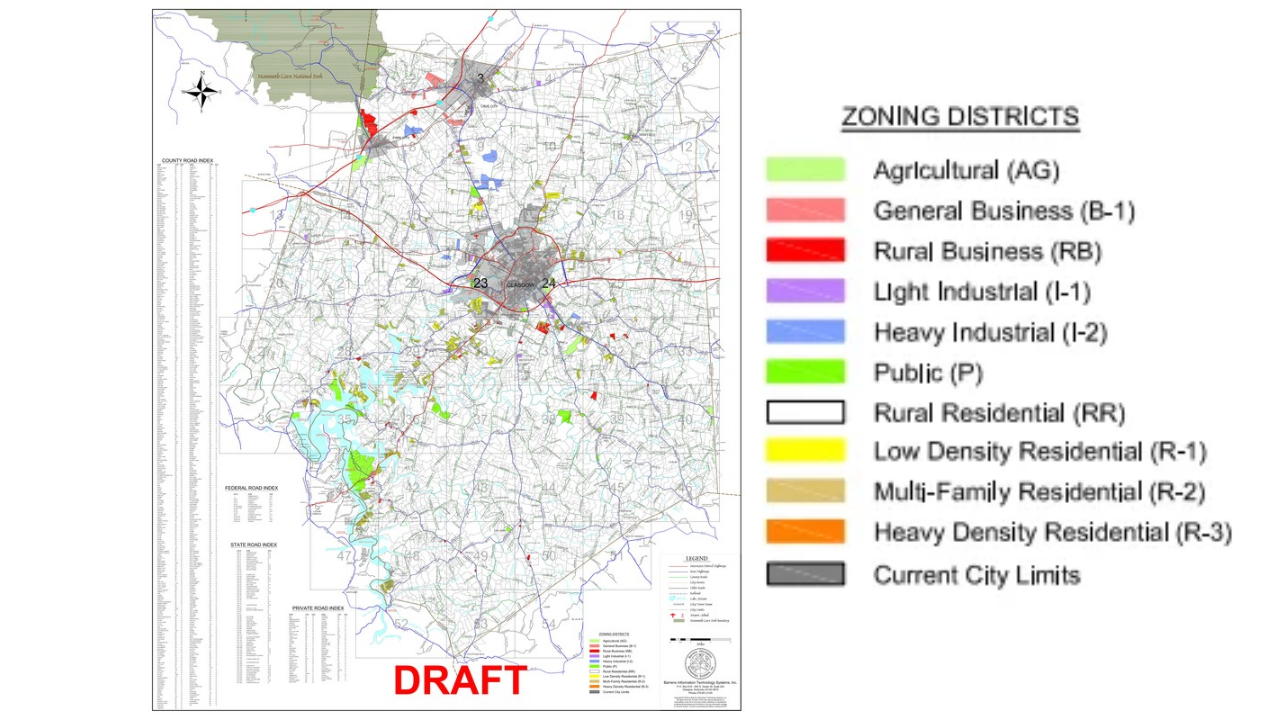
Under the proposed zoning map, most of Barren County is designated as Rural Residential (RR). The designation is one of 10 classifications outlined in the more than 150-page ordinance.
The district is designed to protect agricultural uses while allowing low-density, single-family homes along existing county and state roads outside established subdivisions.
It would prohibit manufactured home parks, medical cannabis cultivation and processing facilities, medical cannabis dispensaries, junkyards and towing yards, among other outlined uses.
Myatt said the proposal was developed with an emphasis on agriculture and minimizing the impact on residents.
“We wanted this ordinance to be the least impactful on most everyday citizens of our community,” Myatt said.
Another concern raised by residents was the potential for land-use regulations to complicate dividing family property, such as setting aside a portion of a larger farm for a child to build a home.
“They could cut that half-acre off for their child or grandchild without having to go for a zone change because it doesn’t change the neighborhood characteristics there already,” Myatt said.
He said a Rural Residential designation allows for that flexibility, while an agricultural designation could make a zone change more likely for such a division.
Property divisions would still be subject to existing subdivision regulations, which are separate from zoning requirements. Myatt noted that the term subdivision can apply to individual property divisions, not just large residential developments commonly associated with the word.
The other classifications mentioned in the overarching ordinance are Agriculture (AG), General Business (B-1), Rural Business (RB), Light Industrial (L-1), Heavy Industrial (I-2), Public (P), Low Density Residential (R-1), Multi-Family Residential (R-2) and Heavy Density Residential (R-3).
Each classification is designed to accommodate specific types of land use and development.
For example, a large factory would generally fall under the Heavy Industrial (I-2) classification. Industrial zones are positioned near major roadway corridors to accommodate heavier traffic volumes and near city limits and existing infrastructure, including railroads.
Farming remains exempt under the proposal
Farmers have certain protections under state law, including provisions that limit local zoning regulations on qualifying agricultural uses.
“To be honest with you, the most protected group in a zoning classification, in any zoning, is the farmer,” Myatt said. “All agriculture uses and processes are exempt in the county in every zoning classification.”
Under the proposed ordinance, qualifying agricultural activities would remain exempt from zoning restrictions regardless of a property’s designated classification.
“For the everyday, average farmer this zoning ordinance will impact them very little,” Myatt said. “They are exempt.”
 Brennan Crain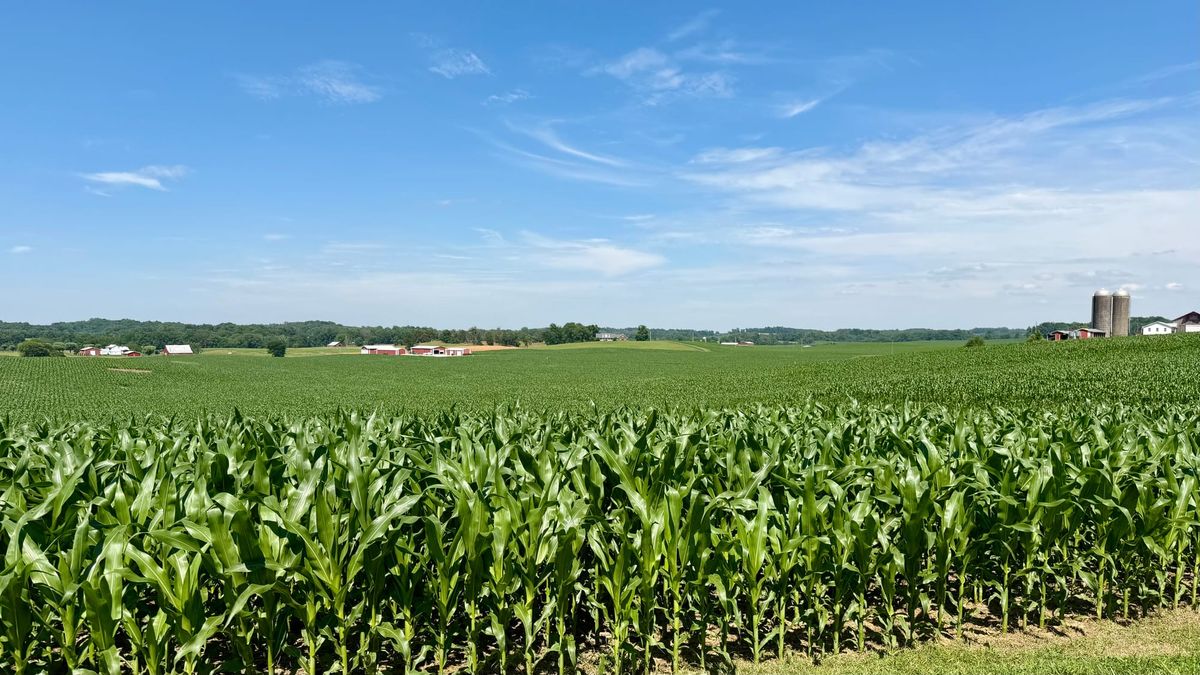
Myatt said the absence of zoning regulations currently limits the ability of farmers and other residents to weigh in on proposed developments on neighboring properties.
If the regulations are adopted, property owners would have the opportunity to present evidence and testimony during public hearings before the JCCPC considers proposed developments.
“That farmer would have the ability to present credible evidence, and findings of fact, of what that potentially can do their livestock, to their crops, to their grants, based on the proposal,” Myatt said.
Existing property uses may continue
The proposed ordinance also raises questions about how new zoning requirements would affect properties already being used in ways that may not conform to the new rules.
Under Kentucky law, lawful uses of buildings and property that do not conform to newly adopted zoning regulations may generally continue under certain conditions.
“State law says you can’t expand it,” Myatt said. “But you can continue with no problem whatsoever. They call it existing, nonconforming use.”
However, those protections may not extend to proposed changes or expansions of a nonconforming use or structure.
For example, a property owner seeking to change a property’s use from agricultural to commercial would need to comply with applicable zoning regulations and obtain any required approvals.
Future land-use map also up for consideration
Alongside the proposed zoning map, the JCCPC is scheduled to consider an amendment to the county’s future land-use map, which is part of Barren County’s Comprehensive Plan.
The plan serves as a long-term guide for how the county could grow and develop. Kentucky law requires comprehensive plans to include a land-use element outlining the anticipated pattern of future development.
JCCPC staff developed the proposed zoning map by reviewing approximately 20,000 properties across Barren County, using data from sources such as the Property Valuation Administrator’s Office to align the proposed designations with existing land uses.
“The current land-use map that we have to propose is what’s currently going on in the world,” Myatt said. “That is the official, by state law, zoning map.”
Myatt said the future land-use map is intended to show how properties could be used as the county develops, rather than establish a permanent designation for every property.
“The proposed land-use map is what a potential property could be,” he said. “It is not finalized-type thing.”
Amendments can be made to the future land-use map as circumstances change and new development patterns emerge, according to state law.
What to expect Monday
The Planning Commission meets monthly to review proposed developments and make recommendations to the legislative bodies of Glasgow, Park City and Cave City. Public hearings are often part of that process.
This month, the JCCPC will hold four separate public hearings related to the proposed Barren County land-use framework, according to Myatt.
They will cover the creation of the land-use ordinance, adoption of an official zoning map for Barren County, an amendment to the future land-use map and adoption of a fee schedule for the zoning ordinance.
“This is the official record. You have to be sworn in,” Myatt said, noting that previous public meetings were designed to allow more candid community feedback. “It is the equivalent of showing up in front of a judge at the courthouse.”
Anyone wishing to speak during a hearing must first be sworn in, with testimony becoming part of the official JCCPC record, Myatt said.
The proposed zoning regulations, zoning map and future land-use map are available for public review online.
The meeting begins at 7 p.m. on the third floor of Glasgow City Hall. According to the published agenda, no other business is scheduled.