
As questions continue, Byrd says she is seeking answers about proposed data center
Byrd says she is working to better understand a proposed Cave City-area data center, including who is behind it and what it would involve.
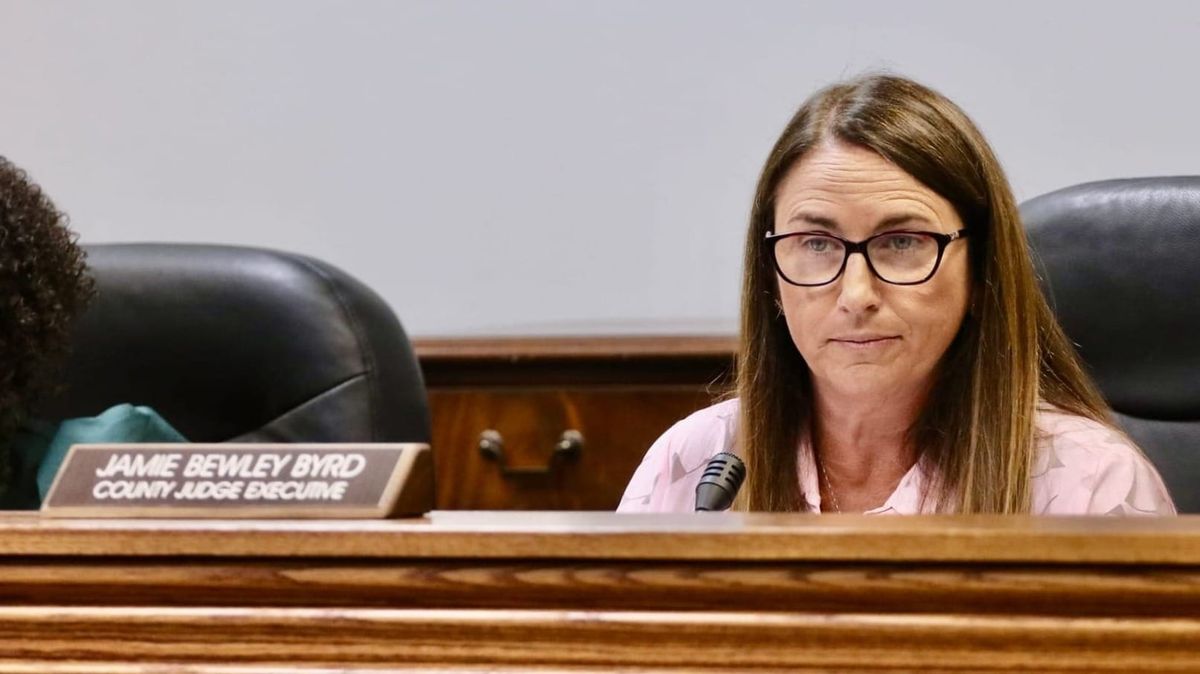
GLASGOW, Ky. — As a proposed data center near Cave City moves through early development stages, Barren County Judge/Executive Jamie Byrd says she is focused on understanding the current proposal and its developers, while utilities say earlier inquiries about infrastructure never advanced into formal review.
Byrd spoke with Barrenside as residents, local officials and utilities continue to examine what the project could mean for the region.
Records obtained through open records requests show she was copied on emails last November in which Kentucky Industrial Alliance LLC contacted Farmers RECC and SCRTC to ask whether electric and fiber infrastructure could support a potential data center.
Byrd said those inquiries were unrelated to the current proposal.
“He [Jared Whitworth, co-owner of Kentucky Industrial Alliance LLC] sent an email out, asking the utilities if there was the infrastructure there, that they had somebody interested. Then there was no response,” Byrd said. “It was not about this project. I know for a fact.”
Communications with Kentucky Industrial Alliance LLC by brennan.crain
She said Kentucky Industrial Alliance LLC, the landowner company tied to the property, later submitted a development plan application she believes was “thrown together.”
That filing is now being cited as the basis for a legal argument that the project should proceed because it was submitted hours before the moratorium passed.
The property involved, several hundred acres near Interstate 65 formerly known as the Branstetter property, was rezoned from agricultural to industrial use by Cave City roughly two years ago, long before the current proposal emerged.
Byrd said those early discussions briefly touched on the concept of an “end user,” the industry term for a company such as Meta or Google that would ultimately operate use the data center, but said that conversation ended quickly.
“It ended as quick as it even started,” she said.
She described the broader structure of data center development as involving three separate actors: landowners, developers and end users. In her view, confusion often arises when those roles are blurred in public discussion.
As many as 30 data center projects are underway across Kentucky.
“These are all developers. They’re not end users,” Byrd said. “There’s only so many users. So what they're doing is they're all trying to get those end users to bite their project. I don't know enough about it as to how that determination is done.”
After that initial inquiry last year faded, Byrd said she did not hear further discussion until a new proposal surfaced in May. In her words, the current proposal “came out of left field.”
She said the May proposal is entirely separate from the earlier inquiry, even though it involves the same landowners.
The earlier effort included reference to an identified end user, while the current proposal does not, something she said remains an open question.
Sorting out who is behind the current proposal
While Byrd said she is familiar with the landowners involved, she emphasized that she does not know much about the developers behind the current proposal and is still working to understand how the project is structured.
That lack of clarity, she said, is part of the problem.
“I just wish, development wise, they would come to the table to explain the project,” she said. “These people came to this area looking for property. Nobody sought them out. I’m not bringing these people. I don’t know these people.”
Her role, she said, is not to promote or oppose a project before understanding it, but to determine what is actually being proposed for the community.
“My job is to figure out what they’re trying to bring to the community,” she said.
Records obtained through an open records request show Kentucky Industrial Alliance LLC requested that Byrd and the local economic development authority release an economic analysis tied to the proposed project, which was provided to them prior to being released publicly.
A June 5 text message from landowner representative Jared Whitworth to Carpenter and Byrd said, “Adam says we are good to put his supplied paperwork out to the media.”
Byrd said they did not immediately respond and chose not to distribute the document because they needed to verify the projections in the study.
“We needed more information confirmed and we needed to discuss the property tax information on the paper with the PVA because we are not offering any discounts, reductions or incentives,” she said.
The document was later released to the media by the landowners.
 Brennan Crain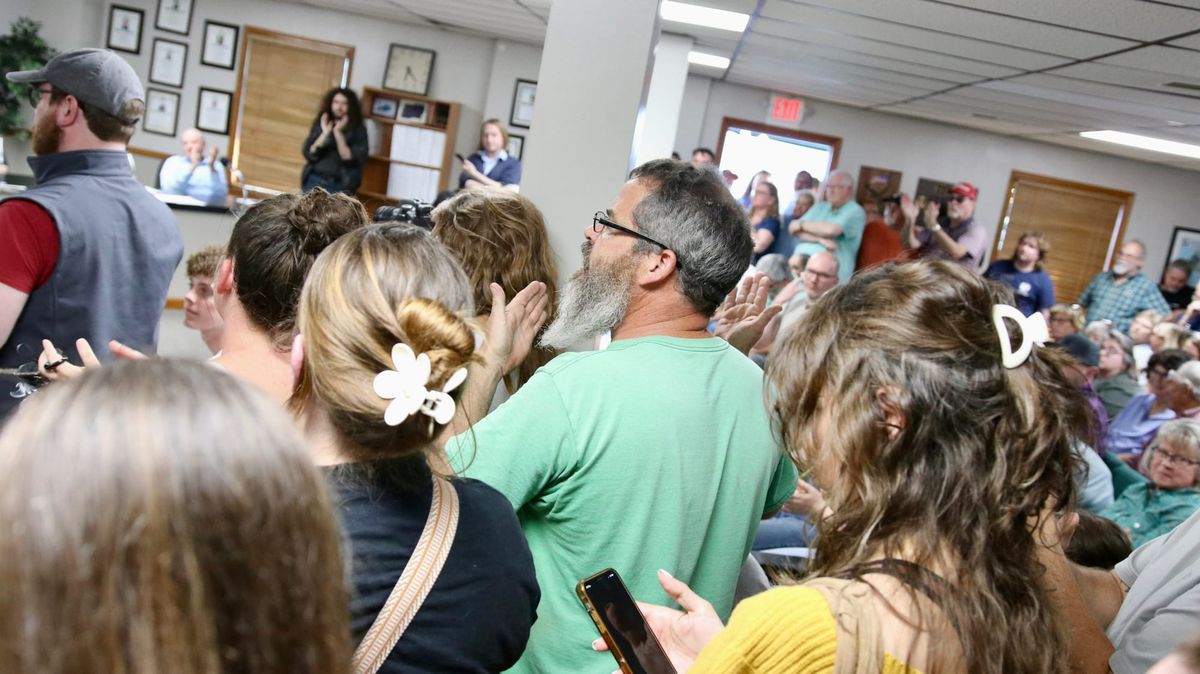
The analysis lists Cave City DataCo I, LLC as the client, an entity not registered as an active business in Kentucky.
On June 1, Byrd participated in a conference call that included Maureen Carpenter, CEO of the Barren County Economic Authority, representatives of Kentucky Industrial Alliance LLC, and the project’s developer.
Byrd said the developer was represented on the call by Adam DeSimone, managing partner of OTN Group, which she said is believed to be behind the current proposal and has been involved in a separate data center project in Franklin.
She said she initiated the call in an effort to get basic answers.
“That’s the problem,” she said. “No one knows what’s going on.”
During the discussion, Byrd said the developer outlined technical elements of the project, including plans for power generation and a closed-loop water system. But she said those explanations did not resolve her concerns.
Afterward, she said she followed up with economic development officials.
“After I ended the conversation, I talked to Maureen about it,” Byrd said. “I said, ‘I just don't feel like we have the answers.’”
She said she has repeatedly asked for the developers to appear publicly and explain the project directly to residents, but said they have been hesitant, citing prior public opposition in another Kentucky community.
“I have said these people need to come explain what they’re doing,” she said, adding that developers referenced a failed effort in Franklin as a reason for avoiding public presentations. “I’m like, ‘I don't care though. I still want you to come.’ We all need to know what’s going on.”
Utilities and early inquiry process
Utility providers contacted in the early stages of the inquiry said the outreach did not advance into formal review or project engagement.
SCRTC said it did not engage in any discussions or communications regarding a data center proposal and noted that while an email inquiry was delivered to an employee in November, no response was sent and no exchange occurred.
“We were not aware of this email that was sent to one of our employees by the Kentucky Industrial Alliance. Even though it seems to have been delivered to the inbox, I am not sure the inquiry was even acknowledged by us. There was no email reply sent back to the inquiry in response,” SCRTC said in an email to Barrenside.
 Brennan Crain
Farmers RECC said inquiries of this type remain in a preliminary category until a formal application is filed, and that no system studies, cost estimates or infrastructure analyses are conducted prior to that point.
It said until that step is taken, all inquiries are considered speculative and handled through standard cooperative procedures in coordination with East Kentucky Power Cooperative.
“As a regulated electric utility, Farmers RECC has an obligation to serve homes, farms, businesses, industries and other electric users that locate in our service territory,” the utility said.
Farmers RECC also noted that it does not disclose confidential information involving landowners, prospective members or site-specific economic development inquiries.
Power, water and site suitability concerns
Beyond questions about transparency and process, Byrd said she has also been trying to understand whether local infrastructure can support a facility of the size being discussed.
“I’m not saying they’re good or bad because we don’t know what we’re getting.”
Still, she stressed that she does not believe the landowners themselves are acting in bad faith.
“I know that they’ve always wanted to bring jobs and opportunity to the area,” she said.
A statement from Kentucky Industrial Alliance LLC echoed that sentiment, saying the company is committed to regional economic development and the protection of natural resources, including groundwater and quality of life.
For Byrd, the broader public reaction reflects uncertainty more than opposition.
“I get the fear. I think people are living in the fear of why,” she said. “Why do we need? I have that question. Everybody’s dealing with this topic right now.”
Her position, she said, is not ideological.
“I’m against bad data centers, OK? I’m not saying there’s good data centers either,” she said. “But I still need to know what’s going on.”
She also said the county is not offering incentives to attract the project.
“I can tell you what I'm not going to do. I'm not offering any tax breaks. The county’s not offering anything.”
Regulation, authority and legal context
As the discussion continues, Byrd said she has also had to clarify what local government can and cannot control at this stage.
Cave City passed a one-year moratorium to pause data center development applications while city leaders gather public input and consider what regulations to put in place. Without the moratorium, applications would be reviewed under Cave City’s existing land-use laws.
 Brennan Crain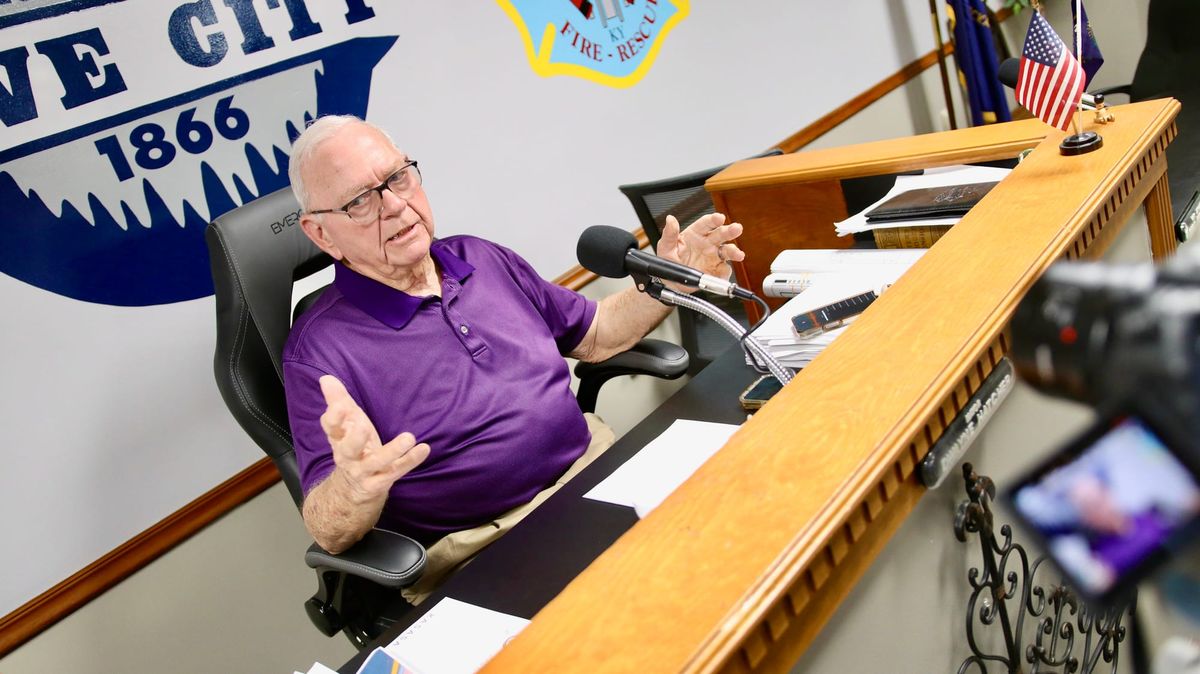
The situation, she said, underscores the limits of the county’s authority.
Barren County does not have countywide land-use regulations, which limits its ability to regulate development, including large-scale industrial projects, according to Barren County Attorney Mike Richardson.
Both Richardson and Kentucky Association of Counties attorney Rich Ornstein have indicated that moratorium-style measures in counties without zoning authority may not carry the legal effect many residents assume.
 Brennan Crain
Even as nearby counties have adopted moratoriums, Byrd said she does not believe they change legal outcomes in the way the public often assumes. She described such measures instead as “smoke screens” intended to reassure residents rather than alter what can ultimately be approved.
No proposal to enact a county land-use ordinance is currently under consideration. However, county officials plan to hold four public listening sessions in July. Dates for those sessions have not yet been announced.
Public pressure and unanswered questions
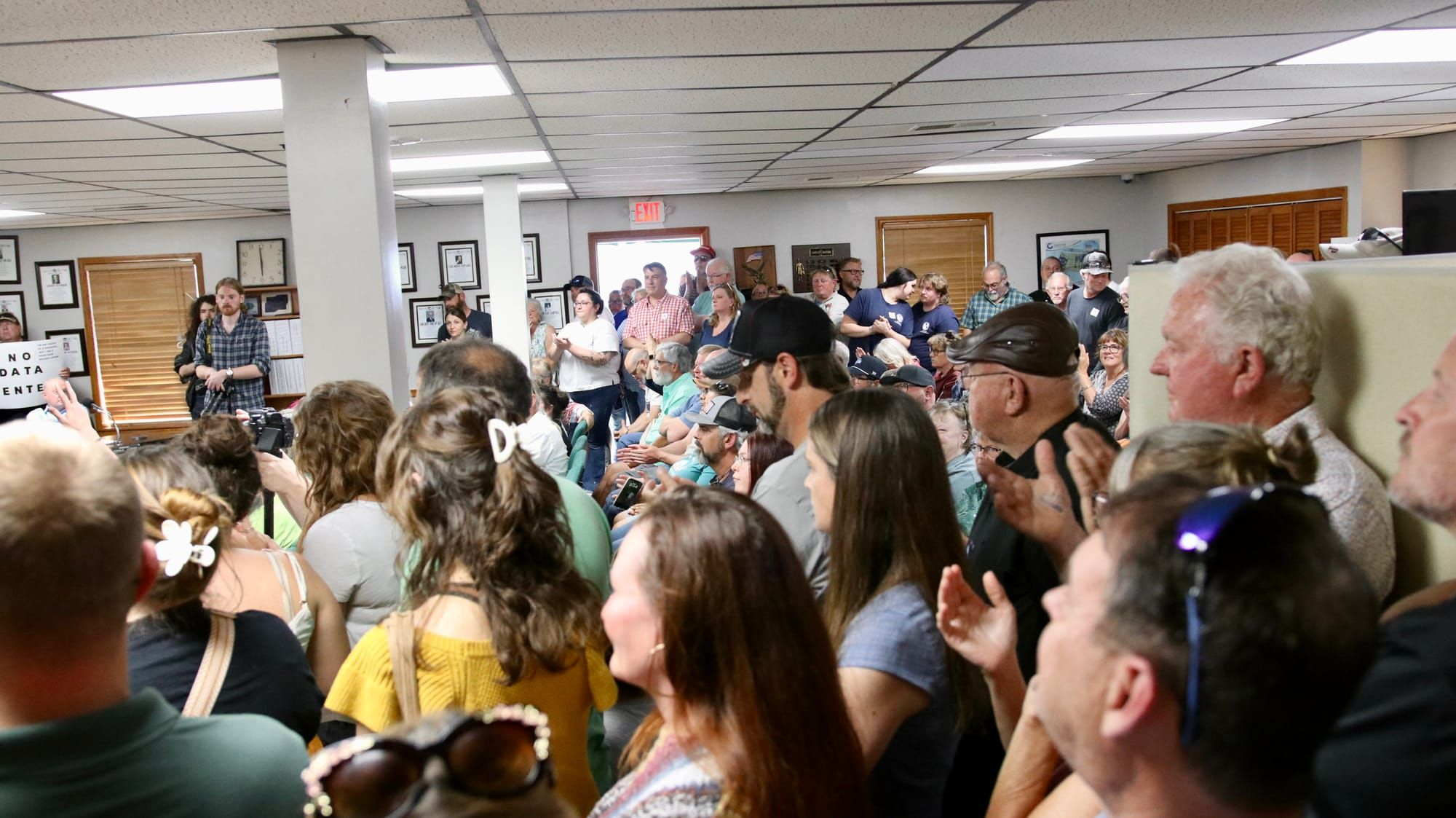
The proposal has triggered significant public attention in Cave City, where officials recently approved a one-year moratorium on data center development while they gather information. Earlier attempts to establish regulations were rejected by the city council, with some members advocating for an outright ban.
Amid that debate, Byrd said she has also faced questions from residents trying to link the proposal to Tate Inc., a company that manufactures data center components and is establishing operations in nearby Glasgow.
She said those claims are untrue and that the two are unrelated.
Byrd said she has not addressed the proposal in public because she feels her ability to act at this stage is limited while formal processes are still developing.
She also rejected suggestions that officials are operating under nondisclosure agreements.
“I can honestly say I’ve not signed an NDA on anything since I’ve been in office,” she said, adding that confidentiality rules in closed sessions are advisory rather than binding.
Cave City officials also reported no nondisclosure agreements in response to recent open records requests.
Still, Byrd said she understands why residents are skeptical, particularly given the scale and complexity of the proposal.
What happens next?
Byrd said she had been scheduled to meet with Mammoth Cave National Park Superintendent Barclay Trimble, but the meeting was postponed after the park raised concerns about public discussion of the conversation during a fiscal court meeting.

Despite that delay, she said she hopes to continue gathering environmental input and bringing those concerns directly to developers.
“I just want to make sure I get all of the facts, and I haven’t gotten that yet.”
At this stage, she said her review is focused on five core issues: electricity demand and cost impacts, water usage, environmental effects on Mammoth Cave, noise impacts in Cave City and broader natural resource concerns.
“If those five things aren’t taken care of, I’m not going to listen to it,” she said.
At the same time, she acknowledged that potential tax revenue and investment cannot be dismissed outright, but only if those concerns are addressed first.
“I’m against anything that will hurt our citizens and our resources,” Byrd said.
For now, she said her role is not to champion or reject the project, but to understand it, while also encouraging developers to speak directly with the public about their plans.
“I have said these people need to come explain what they're doing,” Byrd said.
And until she has clearer answers, she said, that is where the process remains.
DeSimone and OTN Group, the developer believed to be behind the project, did not respond to requests for comment after outreach through the company’s website and attorneys representing the firm in Simpson County.