
Hollywood pressure turns comedic in Far Off Broadway Players’ latest production
If there is a defining quality to this production, it is controlled chaos.
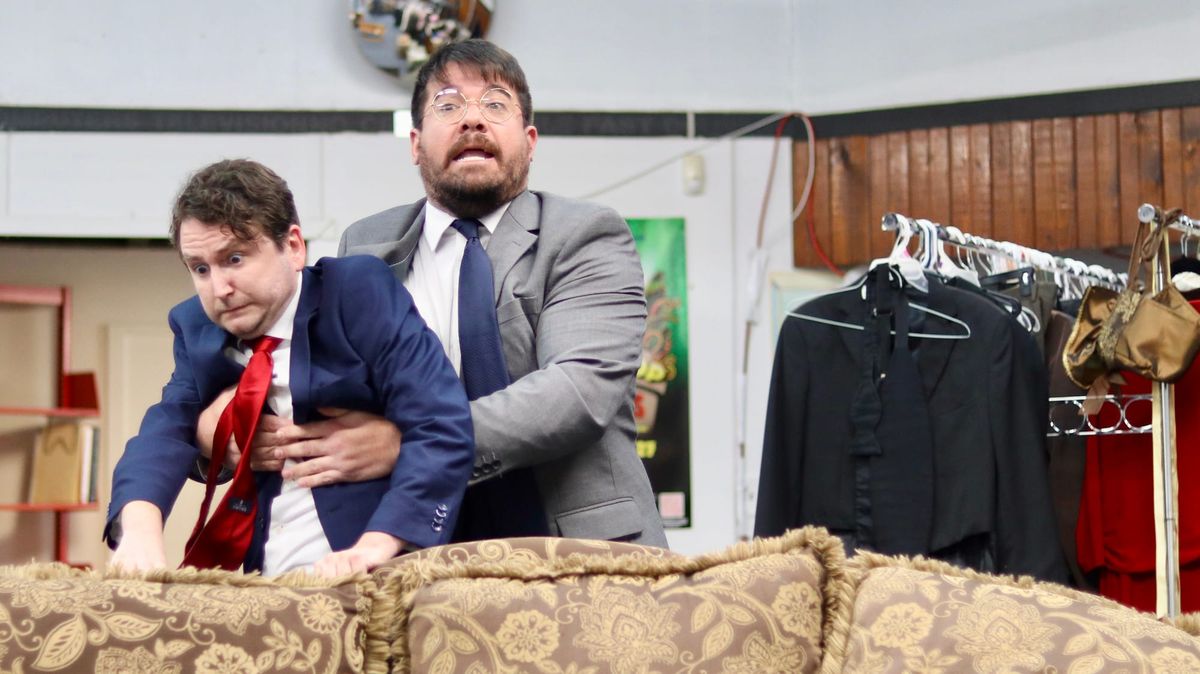
GLASGOW, Ky. — Three men. Five days. One movie, and a whole lot of creative chaos.
Far Off Broadway Players lean fully into the frenzy with their latest production, “Moonlight and Magnolias,” by Ron Hutchinson, opening this weekend at the Plaza Theatre.
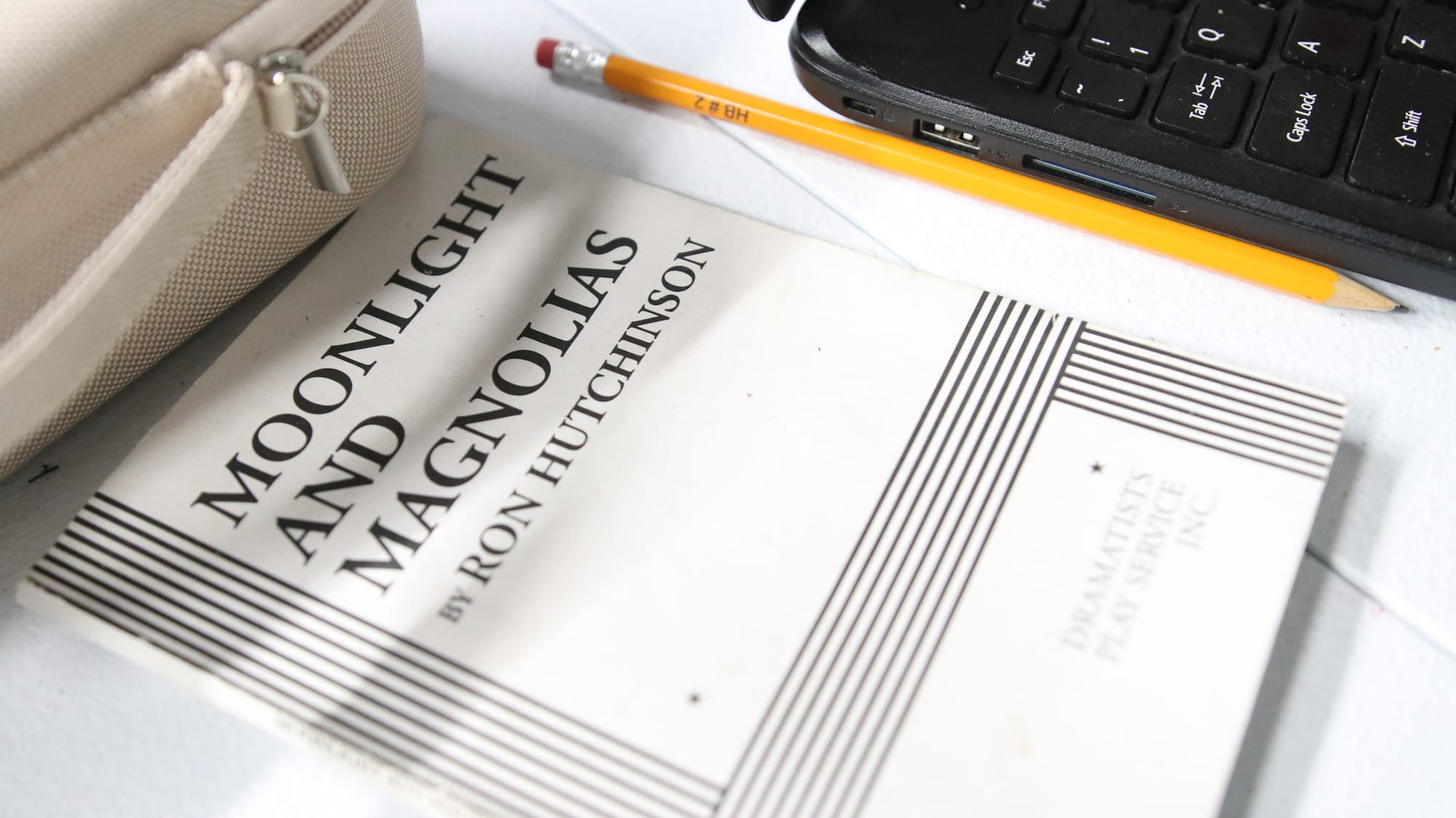
What unfolds is a tightly staged comedy that thrives on pressure, ego and the absurdity of trying to rewrite Hollywood history on a deadline.
The play revisits a legendary moment in film lore, when producer David O. Selznick halts production of Gone with the Wind and locks himself, screenwriter Ben Hecht and director Victor Fleming in a room to overhaul the script in just five days.
Confined with little more than bananas, peanuts and mounting frustration, the trio becomes a pressure cooker of clashing egos and frantic invention.
The Far Off Broadway production leans into that claustrophobia effectively, keeping the energy tight and the pacing brisk enough that the audience rarely has time to settle before the next comedic escalation hits.
Joshua Stewart anchors the production as Selznick, playing the role with a jittery intensity that sets the tone from the opening moments.

Nickolas Hudson, as Hecht, provides a sharp counterbalance: dry, clipped and often hilariously unimpressed as he repeatedly admits he has not read the novel at the center of the entire crisis.
“I read it and just couldn't stop laughing as I was reading through it,” Hudson said of the script prior to stepping into the role.
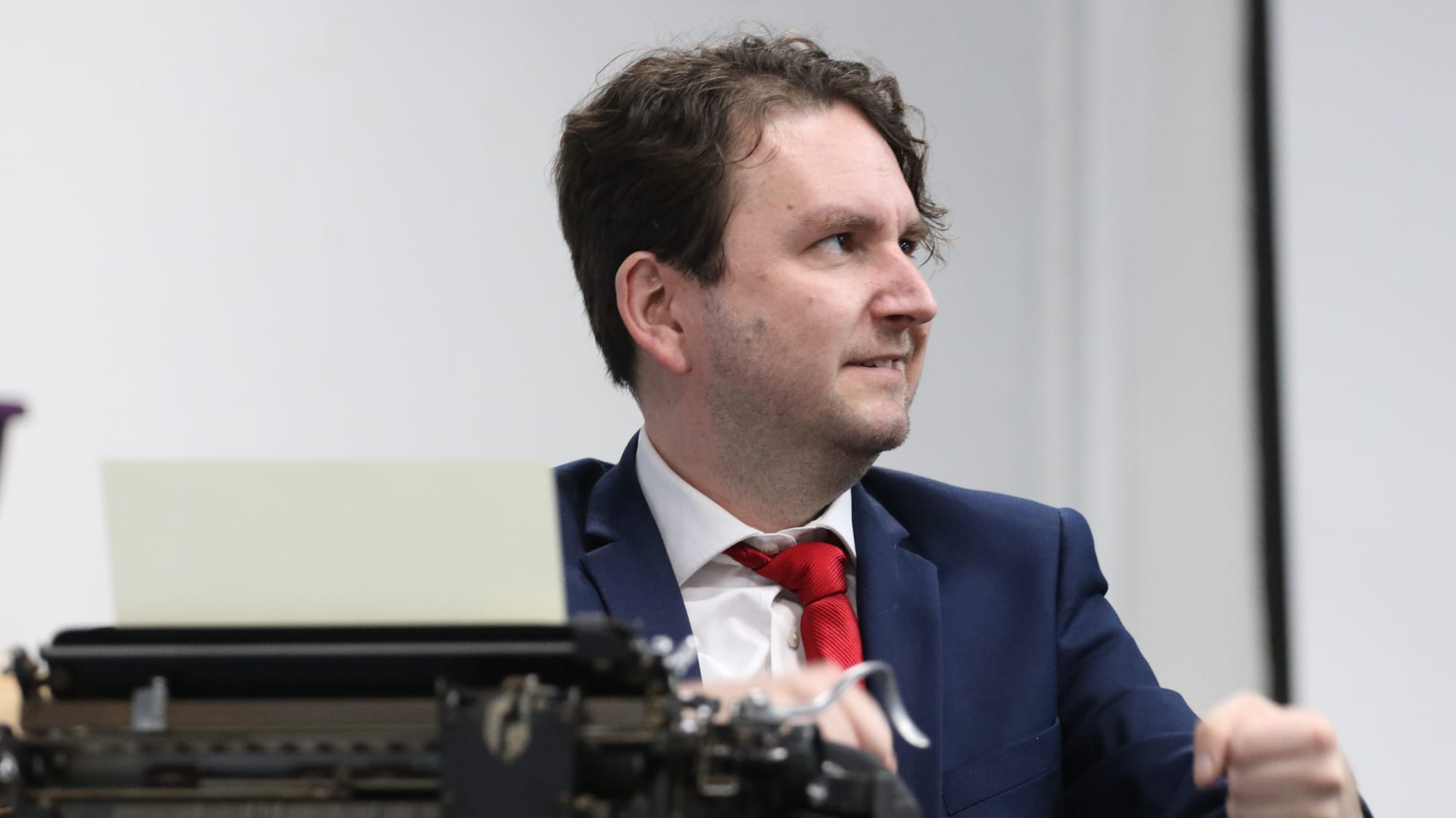
Nick Swayne brings Fleming to life with an imposing physical presence that plays well against the script’s rapid-fire dialogue. A Glasgow firefighter in his day job, Swayne leans into a stoic, no-nonsense delivery that grounds the chaos while still landing the production’s more understated comedic beats.
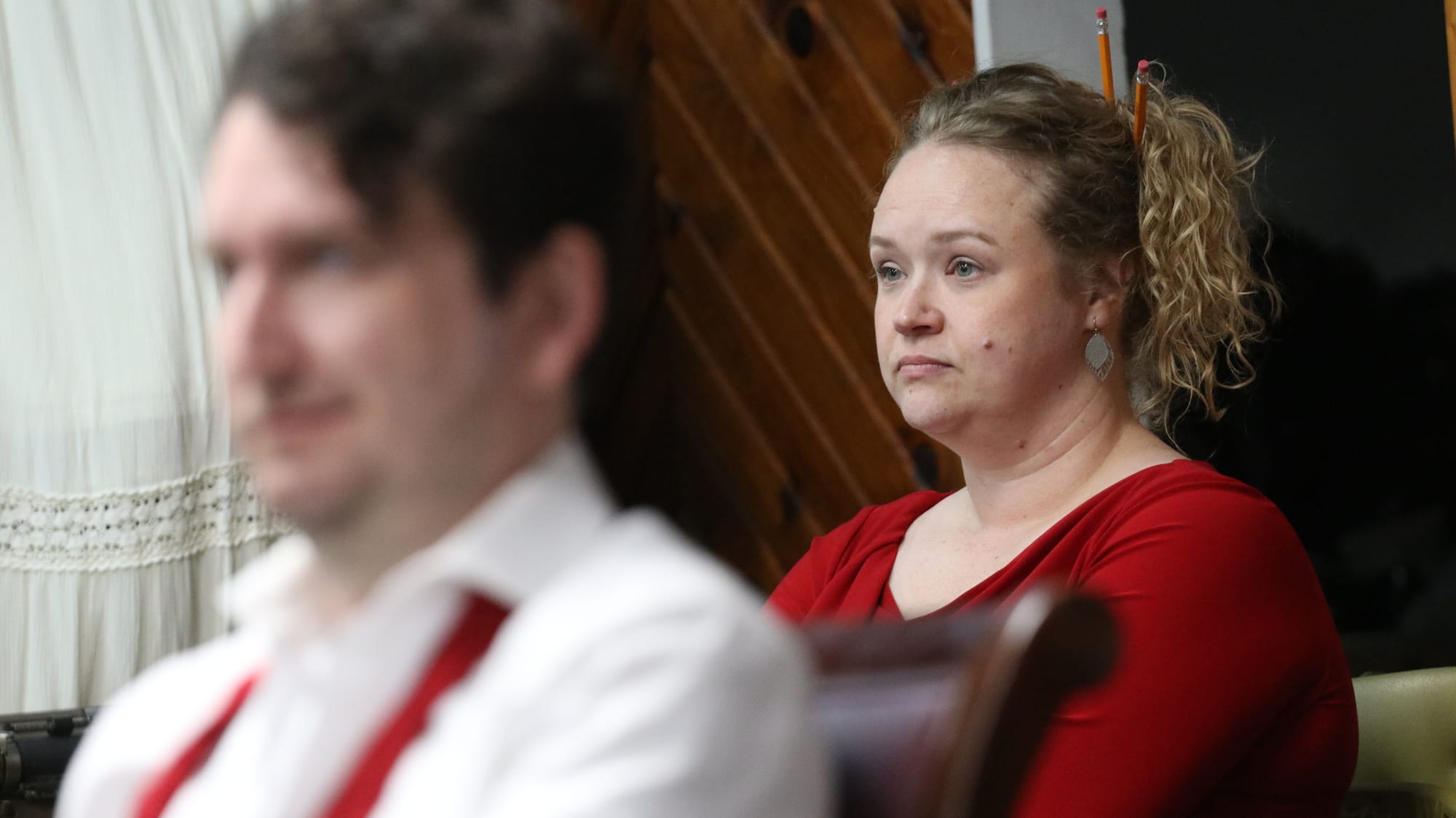
Cassaundra Meadows, as Miss Poppenghul, provides one of the show’s most quietly effective performances.
While the central trio spirals into creative panic, she remains the production’s most stable presence, managing Selznick’s demands, keeping supplies flowing, and subtly reinforcing the escalating absurdity around her.
That absurdity eventually takes over the stage entirely.
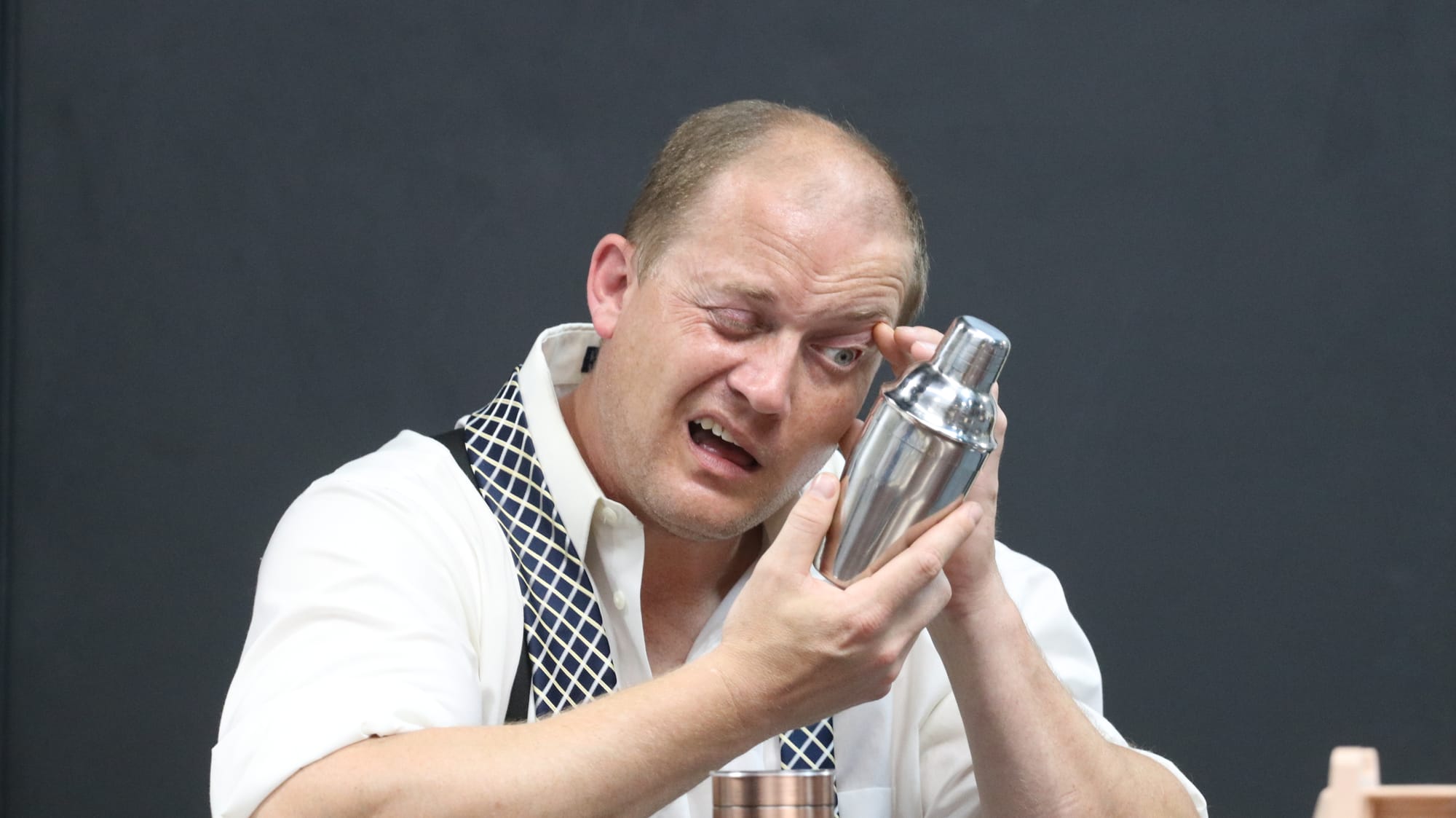
By the time the story reaches its peak, peanut shells, crumpled papers and scattered remnants of chaos define the space. The production fully embraces disorder.
The result is a stage environment that feels lived-in, frantic and deliberately unpolished in a way that suits the material.
Thematically, the show also brushes against real-world tensions beneath its comedy. Ben Hecht’s Jewish background is acknowledged as part of the character dynamic, while Victor Fleming represents a more traditional Hollywood authority figure.
The production doesn’t dwell on historical analysis, but instead uses those contrasts to fuel the rapid-fire exchanges and comedic friction.
Both men, in real life, were major figures in early Hollywood.
Hecht known for his sharp, fast scriptwriting and reputation as a problem-solver under pressure, and Fleming for directing major studio-era classics including “Gone with the Wind” and “The Wizard of Oz.”
One of the production’s more unexpected comedic beats comes in a passing reference to Judy Garland, delivered as part of Fleming’s blunt, old-school persona. He only hit her once, of course.
The play’s willingness to blur the line between period humor and modern sensibilities makes it a sharp, if occasionally uneasy, comedic balancing act.
As the typewriters grow louder and the room becomes increasingly unhinged, the production finds its rhythm in escalation. What begins as a locked-room comedy gradually becomes a full sprint toward collapse and resolution at once.
The pacing rarely lets up, which is where the production is at its strongest.
Behind the scenes
The Far Off Broadway Players continue their trademark mix of community theater discipline and ambitious staging. Director Chance Beals, a longtime member of the group, brings both acting and stage management experience to the production.
“Chance has really, really blocked and directed a great show here,” said Paul Glodfelter, the group’s artistic director. “This is all him. This is all him.”
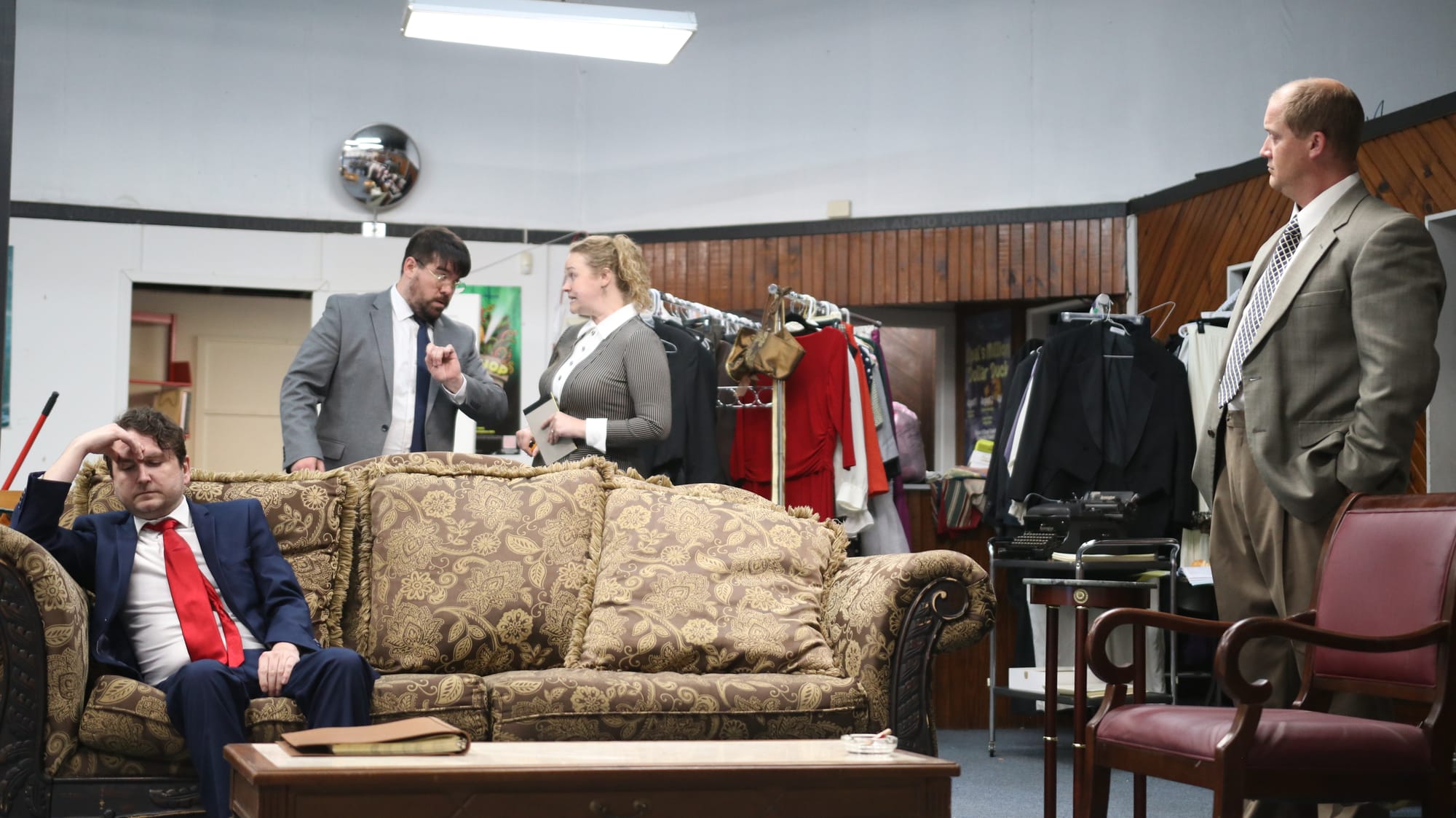
Beals estimated the cast had rehearsed the production roughly 20 times as of mid-April. Rehearsals begin with auditions and a table read, where the cast first encounters the script in a straightforward reading before layering in performance and blocking over weeks of work.
You won’t see Olivia Vaught and Tracy Martin on stage this time, but the two serve as production stage managers, overseeing every sound effect, musical cue and set piece throughout the show.
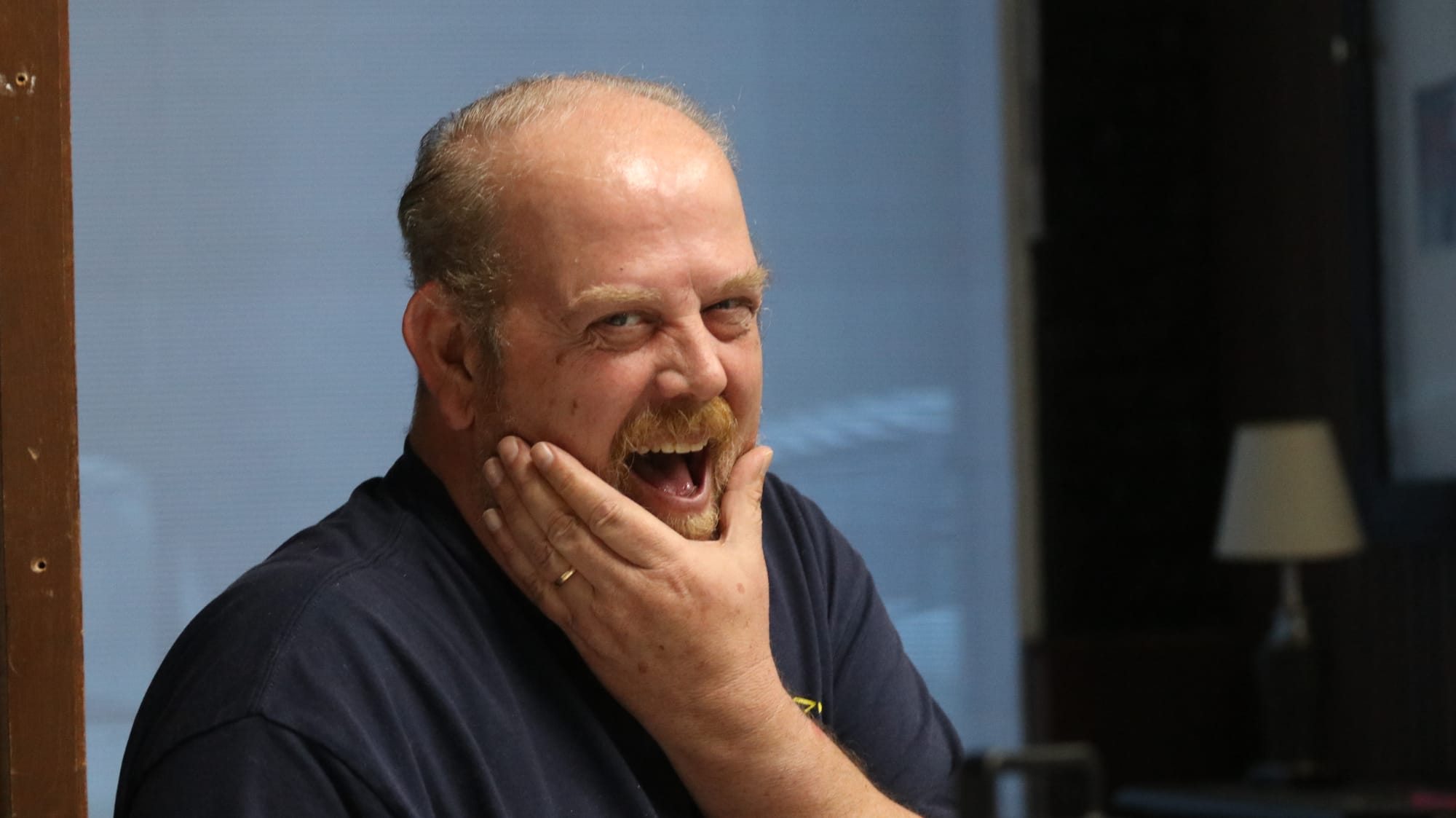
Glodfelter, who has performed in the production himself, including playing Fleming, said the script remains a favorite of his.
“I just love the script. It’s so well-written,” he said.
If there is a defining quality to this production, it is controlled chaos.
Even the production’s own sense of humor spills into the environment, from the literal peanuts scattered across the stage to the increasingly frantic energy of the performers themselves.

The show does include mature language and themes, including references to Nazis and occasional profanity, but it never loses sight of its comedic foundation.
Get your tickets
Tickets are on sale now online or available at the door, with proceeds supporting continued Far Off Broadway Players productions in the Barren County community.
Glodfelter noted audiences often travel in from neighboring communities, and the cast is once again hoping for a strong turnout. Given the energy on stage, it’s easy to understand why.
The show runs on stage April 24–26.