
In veto message, Beshear cites warning that budget bill would force cutbacks on KY courts
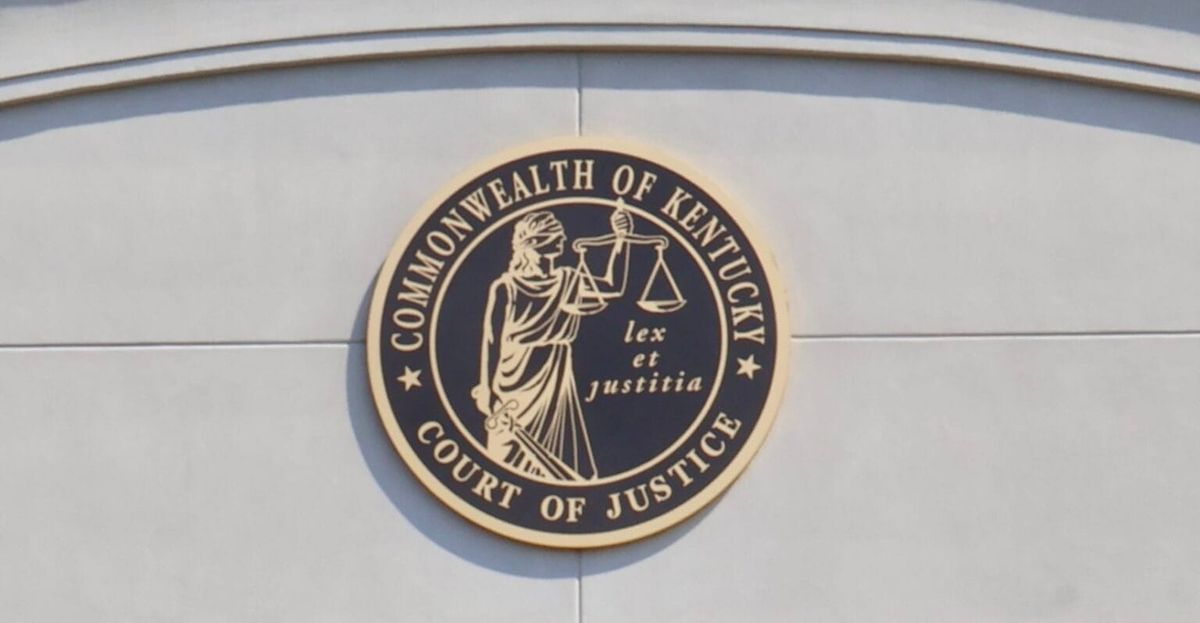
Beshear’s vetoes include judicial branch allocations the chief justice has warned would not be enough to keep all court services running.
Decrying what he characterized as underfunding and unfunded mandates, Gov. Andy Beshear on Monday issued line-item vetoes on budget bills passed by the General Assembly.
Beshear’s vetoes include judicial branch allocations the chief justice has warned would not be enough to keep all court services running.
Lawmakers return to Frankfort Tuesday and Wednesday to wrap up the 2026 legislative session. During that time, the Republican supermajority can override the Democratic governor’s vetoes.
Here’s a look at some of the budget items Beshear vetoed, and why he did it.
Judicial branch budget
Beshear issued line-item vetoes on House Bill 504, the judicial branch budget, including the operations appropriation.
“The Judicial Branch notified the legislature that the funding levels in House Bill 504 are insufficient to maintain the mandatory functions of the Court of Justice, including current services and personnel,” Beshear said in his Monday veto message. “The Judicial Branch has publicly stated that it projects a General Fund deficit of $12,600,000 in the next fiscal year and $17,000,000 the following fiscal year.”
READ ALSO: KY chief justice warns drug, mental health courts would be wiped out by budget proposals
According to the Administrative Office of the Courts, the judicial branch needed $354.7 million from the General Assembly “to maintain court operations at current levels,” not including a 2% raise for employees. The $344 million approved in HB 504, includes a 2% raise for employees.
In its current form, the Administrative Office of the Courts expects a deficit of nearly $13 million in the 2027 fiscal year and $17 million in 2028 “if all current service levels remain the same.”
Chief Justice Debra Hembree Lambert previously said she would have to cut services that are not constitutionally required, including drug, mental health and veteran courts. She has also warned of “significant layoffs.”
After lawmakers agreed on a final budget plan, the Administrative Office of the Courts on April 3 issued a statement saying “the Judicial Branch appreciates the additional funding provided, including ‘rainy day’ funds (not general funds) for the restoration of the Hardin County and Franklin County courthouses after last year’s devastating floods, and other required services related to information technology and contractor rate increases, but it does not resolve the projected general fund deficit for court operations.”
“Our attention must now turn to evaluating how to align operations and services with the funding provided while continuing to support our people and the citizens we serve,” that statement said.
Medicaid
Beshear vetoed several changes to the Medicaid program in House Bill 500, including a section requiring the Department for Medicaid Services or the Finance Administration Cabinet to make “12 monthly payments in each fiscal year to Medicaid managed care vendors contracted to provide services for the Medicaid program.”
In his veto message Beshear wrote that “implementing a Medicaid benefits budget that contains a shortfall of $2.8 billion over a two-year period will require significant programmatic changes. This part eliminates one of the available levers to control costs that has been used in the past to prevent even worse reductions in services, coverage, and reimbursements to providers.”
Beshear vetoed another section that stated: “If it is deemed necessary to make reductions in Medicaid services, a priority shall be made to reduce services not expressly authorized by the General Assembly.”
Beshear wrote his reasoning for this veto: “This provision gives priority to a set of services only because they were contained in a state statute. Many Medicaid covered services are not set forth in state statute. This provision fails to acknowledge that and would result in less optimal reduction decisions.”
Kinship care
In House Bill 500, the Kentucky General Assembly provided the Beshear administration with $12 million over the next two years to implement a 2024 law to help kinship care families.
The two-year state budget includes a $6 million appropriation for Senate Bill 151 for each fiscal year.
The legislature also directed the Beshear administration to pursue federal funds to help fund foster care payments to kinship care families.
Beshear vetoed the requirement to pursue federal funding, saying: “I am vetoing this part because the funding provided is to support payments to relative or fictive kin caregivers for foster children. It is not to provide sufficient funding for the maintenance of effort of a federal program.”
The legislature approved and Beshear signed SB 151 in 2024. It would provide financial relief to grandparents and others who are raising children who otherwise would be in state care by making it easier for the family members to qualify for foster care payments.
The measure was not funded at the time of passage. The legislature, auditor’s office and Beshear’s administration have, ever since, debated the funding issue — including in court — over who is responsible for it and where the money should come from.
This story may be updated.
GET THE MORNING HEADLINES.SUBSCRIBE
Kentucky Lantern is part of States Newsroom, a nonprofit news network supported by grants and a coalition of donors as a 501c(3) public charity. Kentucky Lantern maintains editorial independence. Contact Editor Jamie Lucke for questions: info@kentuckylantern.com.