What happens to opioid settlement money in Barren County?
An inside look at how local opioid funds are being allocated.

GLASGOW, Ky. — Sixty-two Barren County residents died from drug overdoses involving opioids between 2017 and 2025, according to Barren County Coroner Tim Gibson. That averages to nearly seven deaths per year, with the highest annual total being nine in 2018.
As communities continue to grapple with the effects of opioid use disorder, local leaders are also grappling with ways to effectively use their opioid abatement funds.
Settlement funds begin flowing to local governments in 2023
Open records requests have been conducted by this reporter dating back to July 2025 as a continual tracking on the local opioid funds for Barren County and its cities of Glasgow and Cave City.
Park City does not receive opioid settlement funds due to its population size, but local governments can choose to spend its money in Park City.
Records provided in response to those requests did not include any documentation outlining a formal application process for funding or the establishment of dedicated committees to guide spending decisions as of March 2026.
While there are no requirements that the cities and county set up local advisory committees or application processes, best practices for spending opioid funds include transparent and community participation.
Despite this, communications involving officials provided through open records requests strongly indicate a prevalent awareness that expenditures must align with allowable uses for opioid funds.
Records reviewed indicate the majority of funding decisions made as of March 2026 for Cave City and Glasgow have been approved by their voting council members on a case-by-case basis.
Barren County has not expended any of its opioid settlement funds and maintains a balance of $495,866.87, including accrued interest, according to Barren County Treasurer Amanda Steger.
The county began receiving funds in August 2023, starting with three deposits totaling $114,423.04 in the first month alone; however, the dollar amounts will fluctuate over the 18-year timeframe that settlement funds are expected to flow into the state.
How local governments are spending opioid settlement funds
Barren County Judge/Executive Jamie Bewley Byrd said the county plans to establish a committee to help guide funding decisions later this summer.
“We are taking our time,” Byrd said, “[because] we want to make sure we do it the right way and make the right decisions.”
The variability in payment amounts and timing makes long-term planning more difficult due to not knowing what amount the county will receive and when, Byrd said.
She also confirmed the opioid funds are not part of the county’s annual budgeting process.
“So, I’ve taken the approach of we’re going to let that fund sit on a 6% interest-bearing account,” Byrd said. “That way, we can get to where we can plan a little better for some of these organizations.”
Kentucky anticipates receiving more than $1 billion from financial litigation settlements relating to the nation’s opioid crisis. Settlement funds began reaching local government jurisdictions starting in 2022 and will continue until 2040.
In 2017, a sweeping federal lawsuit known as the National Prescription Opiate Litigation was filed in Ohio, consolidating thousands of cases against pharmaceutical manufacturers, distributors, and pharmacies.
The lawsuit alleges the companies contributed to the opioid crisis by misrepresenting the risks of addiction, among other claims.
In Kentucky, 50% of the opioid funds are managed by the Kentucky Opioid Abatement Advisory Commission and kept in a trust fund to award grants to various organizations and initiatives.
The remaining 50% is distributed directly to cities and counties across the Commonwealth by settlement administrators.
While the litigation remains ongoing, KYOAAC reports that more than $100 million has been distributed across the state so far from its trust fund with the intention to build out the infrastructure to help people impacted by the opioid crisis receive harm reduction, treatment, research, and recovery services, in addition to preventing this problem in the future.
The KYOAAC, established under KRS 15.291, includes nine voting members and is responsible for the distribution of settlement funds in the state. This statute also lays out how the funds can be spent.
The opioid crisis that led to these settlements was fueled in part by a surge in prescription opioid pain medication in the late 1990s and early 2000s.
As prescription rates climbed, so did dependence and misuse, often leading some patients to seek stronger or illicit opioids when prescriptions ran out.
Kentucky ranks among the states most affected by opioid use disorder, consistently placing near the top nationally for prevalence rates. Communities were poorly equipped to handle this surge of misuse, addiction, and overdose deaths related to opioids.
State guidance and best practices for opioid settlement spending
According to Johns Hopkins Bloomberg School of Public Health, state and local governments are encouraged to adopt five principles when spending opioid settlement funds:
- Spend the money with the goal of saving lives
- Use evidence to guide spending
- Invest in youth prevention
- Focus on racial equity
- Develop a transparent decision-making process
John Bowman, Kentucky’s campaign manager of Dream.Org, said he understands the hesitation in spending the settlement funds and applauds the decision on forming committees.
“A lot of our cities and counties are not sure how they can spend the money and are taking precautions [to prevent] bad spending,” Bowman said. “I would much rather see [them] hold on to the funds instead of wasting them.”
“Hopefully this committee incorporates the voices of people with lived and/or living experiences…[which is] good for accountability and to help with what will and won’t work [to] help spend these funds correctly,” Bowman said.
Community-based programs and recovery services funded locally

County magistrates have also approved a $1,000 payment, not paid from its opioid funds, to join the Regional Opioid Coalition with the Barren River Area Development District.
Cave City and Glasgow also joined the coalition, contributing $500 and $1,000, respectively, from their opioid funds.
BRADD, LifeSkills, Med Center Health, and the Barren River District Health Department partnered to bring the project to fruition with BRADD overseeing the budget and funds for the project.
The coalition is connected to the Anchor Project, a multi-phase initiative based in Warren County that received an initial $20 million allocation from the 2024 Kentucky General Assembly.
Construction is underway for the project’s first phase, a mental health crisis and substance use intake center in Bowling Green.
BRADD is coordinating efforts across the 10-county region and working with local governments on best practices for opioid fund use, according to Brooke Edwards, BRADD’s Director of the Barren River Office of Drug Control Policy.
“Our goal is to create a more seamless continuum of care that strengthens long-term recovery and improves overall community health and safety,” Edwards said.
Jennifer Twyman with Vocal-KY said while large regional treatment centers can be a part of the picture, it can’t be the full plan.
“If it’s one county over, if you need transportation, if there are rules or barriers, a lot of folks who are struggling right now are never going to make it through those doors,” Twyman said. “And while construction is happening, people are still using, still unhoused, still at risk of overdose today.”
Twyman said what is seen on the ground is that people connect through outreach, through peers, through harm reduction, and meeting them right where they’re at.
“If we’re serious about saving lives, we have to invest in community-based support now – on the streets, in the neighborhoods, and in spaces people already trust,” Twyman said.
Spending patterns vary across programs and priorities
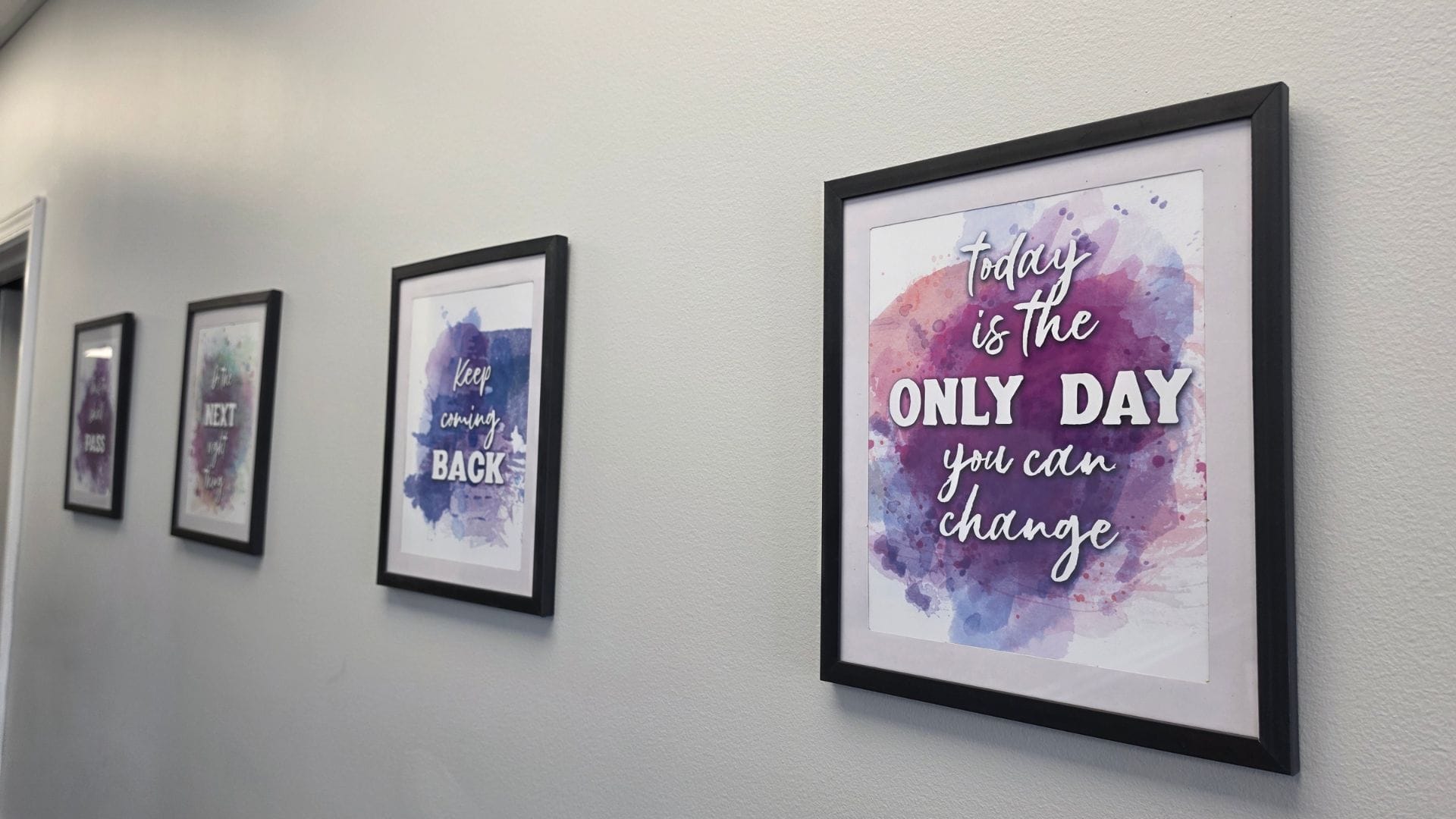
Community Partners for Recovery, a nonprofit recovery community center in Glasgow, opened its doors in May 2025 and offers a variety of services for substance use disorder and recovery, including SMART Recovery.
According to documents, Cave City is one of the three local governments that approved monies from its opioid funds in the amount of $5,500 to CPR.
CPR received $185,371 through a KYOAAC-administered grant, less than the $306,598 originally requested, according to the grant application and subsequent approval documentation.
Barren County officials presented CPR with a check tied to this state-level grant award in area media reports; however, the county was a pass-through entity for those funds, which were not expended from the county’s opioid funds.
Libby Short, CPR’s executive director, said the state commission awarded 77 grants during that funding cycle in 2025 and selected CPR from more than 300 applicants.
Community impact and lived experience
When her son began struggling with addiction as a teenager 17 years ago, resources in Barren County were limited.
“People have no idea how bad I wish there had been something like CPR when he was 15 because there was nowhere we could take him, nothing we could go to as a family,” Short said. “Families need support very much, too.”
“Stigmas are one of the worst things that this community has about addiction, and that was one of my number one goals, to break down stigmas, to make people more aware that nobody just wakes up one morning and says, ‘Oh, I think I’m going to become an addict today’,” Short said.
She also said that, based on data shared with the organization during its planning stages, 279 pregnant patients presented to the local hospital or its associated facilities over a one-year period with drugs and/or alcohol in their systems.
Short said it was difficult to get area statistics but the group successfully obtained a snapshot of one particular day of inmates inside the Barren County Detention Center.
Those numbers included approximately 220 inmates with “well over” 80% incarcerated for drug and/or alcohol related charges, totaling over 1,000 charges when added together.
Short said awareness has improved, “But there’s still a lot of work left to do.”
Additional local opioid fund spending and approvals
In addition to the above spending of opioid funds, documents show that Cave City approved $10,000 on Dec. 8, 2025, for Bridge Kentucky, a nonprofit focused on providing community resources.
 Brennan Crain
Director Wade Copas initially requested $7,000 three days prior to the council meeting; however, council members approved the increased amount unanimously after discussion.
Bridge Kentucky submitted a memorandum of understanding to Cave City Mayor Dwayne Hatcher in an email dated Dec. 5, 2025, outlining a one-year partnership to support “essential stabilization and recovery-focused services.”
According to the agreement, Bridge Kentucky serves individuals experiencing homelessness, with an estimated 60% facing challenges related to opioid use disorder, including risks such as relapse, overdose vulnerability, untreated withdrawal, and justice involvement.
As of mid-April 2026, Cave City has spent approximately 31% of its $52,106.38 in opioid funds since receiving its first payment in late December 2023. According to records, the city’s remaining fund balance sits at $36,106.38.
As of April 30, 2026, the City of Glasgow had received $478,377.67 in opioid funds, according to City Treasurer Victoria Simmons. Of that total, $127,980 — about 27% — has been spent or set aside for specific expenditures.
Records show the first expenditure from its opioid funds supported the Glasgow Police Department.
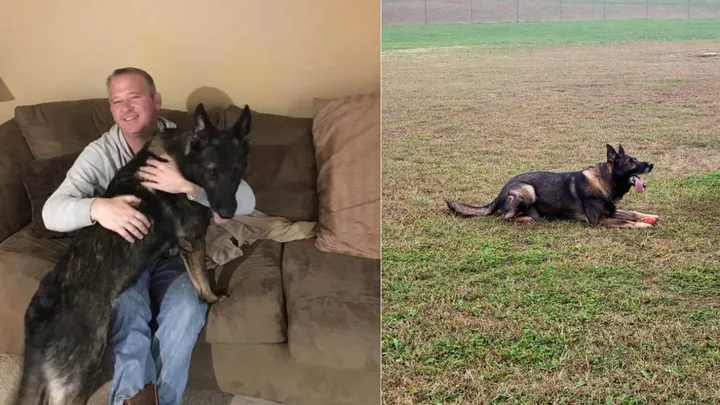
In 2023, the department used $26,000 in opioid funds to purchase two trained K-9 units from a Tennessee vendor.
According to an invoice from Canine Command dated July 28, 2023, one K-9 is trained for narcotics detection and the other for both narcotics detection and patrol. It also states the training meets the standards set by the United States Police Canine Association.
Bowman, who overcame 24 years of addiction and now advocates for Kentuckians through the Dream.Org organization, discourages the use of opioid funds for K-9s, noting the funds are to help communities heal and ensure future generations can avert another opioid epidemic.
City accounting records note two provisions in state law justify the K-9s.
In an email exchange dated Jan. 18, 2024, from Glasgow Police Chief Guy Howie to Justice Van Ingram, the executive director for the Kentucky Office of Drug Control Policy, K-9s are an accepted expenditure from the opioid funds.
“I am not an attorney but I don’t see anything in the regulations that would preclude it,” Ingram wrote in response to Howie’s inquiry.
A municipal order approved in August 2025 authorized opioid funds to pay for a Victim Advocate/Social Worker position within the police department.
Briana Brooks was later selected for the role to provide emotional and psychological support as well as assist police officers in crisis interventions related to opioid addiction.
Brennan Crain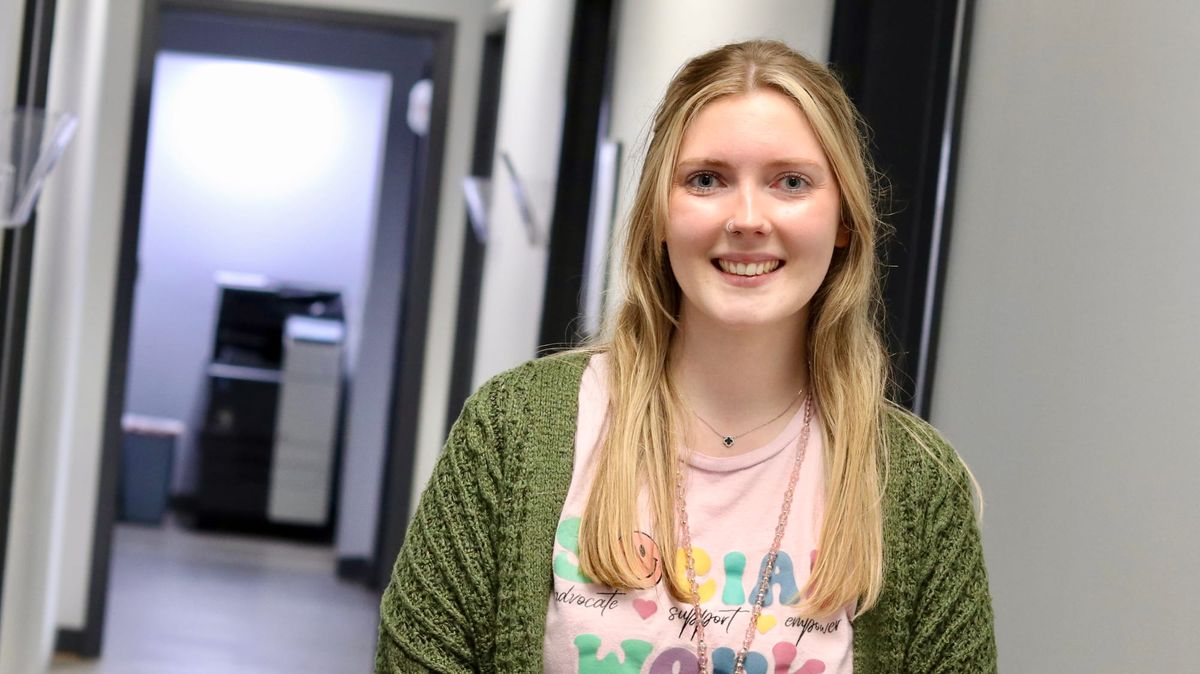
City officials said during a council meeting that the position was a pilot program lasting between 12 and 18 months.
Howie confirmed the salary from the opioid funds totaled $50,980 per year for that position; however, at this time, once the pilot program ends, the city expects to consider the position through its regular budgeting process.
Howie said in that same council meeting that the opioid crisis has contributed to a range of challenges in the community that officers are not always equipped to address, and the new position would help connect individuals and families with appropriate services and provide follow-up support.
“We’re not going to be able to arrest our way out” of homelessness, drug addiction, and mental health issues, Howie said.
“We have to have other avenues, and this person will be that person to help step in where these officers don’t have the time and the ability and the training to do this.”
Youth prevention and recovery infrastructure investments
In March 2026, Glasgow approved an agreement with the Boys and Girls Club of Glasgow-Barren County to provide $50,000 annually, paid quarterly, for a behavioral intervention and prevention program, according to both meeting minutes and the MOU.
The agreement outlines services the organization will provide related to opioid use, which includes a full-time behavioral support specialist ($40,000), curriculum and intervention materials ($7,500); youth incentives ($1,500); and data tracking/reporting tools ($1,000).
Other details include weekly and daily programs, one-on-one sessions, and collaboration with a local counseling service and local schools. The agreement allows for termination by either party and may be renewed annually based on performance and funding availability.
Amanda Hall is the senior director of National Campaigns at Dream.Org and leads strategic efforts to shape national drug policy. She believes the initiatives such as the Boys and Girls Club and Bridge Kentucky partnering with local government can bring positive impacts into the community if done correctly.
“These funds could expand housing, outreach, and wraparound services for people who are unhoused and living with the impacts of drug use and past convictions, making sure they can actually access the support they need without unnecessary barriers,” Hall said. “They could also help establish community-based crisis response teams trained to show up when drug use or mental health emergencies arise.”
Hall said using best practices around curriculum and intervention can change the lives of our youth, but having the correct information and supports makes for a greater impact.
“Done right, this isn’t just funding programs,” Hall said. “It’s changing the direction of people’s lives and giving them the real, sustained support that makes recovery possible.”
Hall further said she is glad to see the community looking at the importance of investing in youth and helping those who are experiencing homelessness.
Treatment access, stigma, and harm reduction perspectives
Caysea Cooper, area director of Behavior Health Group in Bowling Green, a harm reduction facility, said the standard of care it uses is based on each individual. BHG provides medical assisted treatment in its opioid treatment program.
Stigmas are common with MAT programs with many misconceptions around how the medications work for opioid use disorder. Sometimes such stigmas present as a barrier for individuals to seek treatment.
“A lot people struggle [to understand] that it’s not any different than taking a medication to manage high blood pressure or some other disease or illness,” Cooper said.
Barriers that Cooper sees when it comes to individuals accessing treatment for opioid use are things like transportation, finances, losing medical insurance coverage, and even a lack of affordable housing.
“If you don’t have a home and you don’t have food in your belly, treatment usually isn’t what you’re considering at that moment,” Cooper said.
Twyman said both methadone and buprenorphine are gold standards for treatment alongside other aspects.
“They save lives, reduce overdose risk, and help people stabilize,” Twyman said. “They definitely helped me. But treatment isn’t just about medication – it’s also about connection, trust, and timing. That’s where community recovery centers can play a powerful role – if they take a harm reduction approach,” she said.
“When done right, these spaces offer non-judgmental community for people at any stage, create consistent points of contacts who may not engage with traditional systems, and build the kind of trust that often leads someone to seek treatment over time,” Twyman added.
Advocates also say transparency is a key aspect when communities consider where to invest its opioid funds.
“Local governments should follow a clear, transparent process – like the model ordinance for creating opioid abatement advisory councils – which lays out real community oversight, open meetings, public reporting, and ongoing input from people most impacted,” Twyman said.
It’s critical to have directly impacted people and not just professionals in voting roles at the table, holding public meetings with real input, and making funding decisions visible to everyone.
“When that structure is in place, funding is more likely to reflect real community needs, build trust, and actually save lives,” Twyman said.
Recovery from addiction is possible. For help, call the free and confidential treatment referral hotline (1-800-662-HELP) or visit findtreatment.gov.