Why Barren County planted a tulip poplar on the courthouse lawn
The courthouse lawn has served as a central gathering place throughout Glasgow’s history.
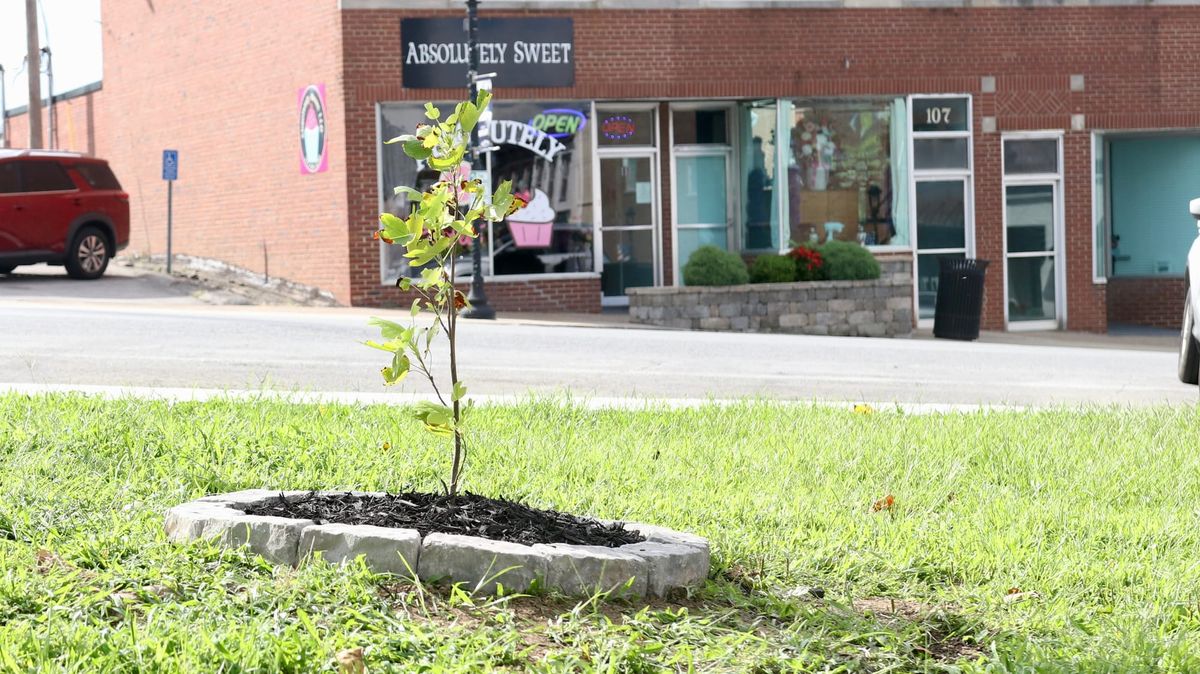
GLASGOW, Ky. — When Barren County leaders traveled to Campbellsville in April to pick up a tulip poplar celebrating America’s 250th anniversary, they expected to return with a tree already well on its way to maturity.
Instead, they found a sapling so small it could nearly fit in a shirt pocket.
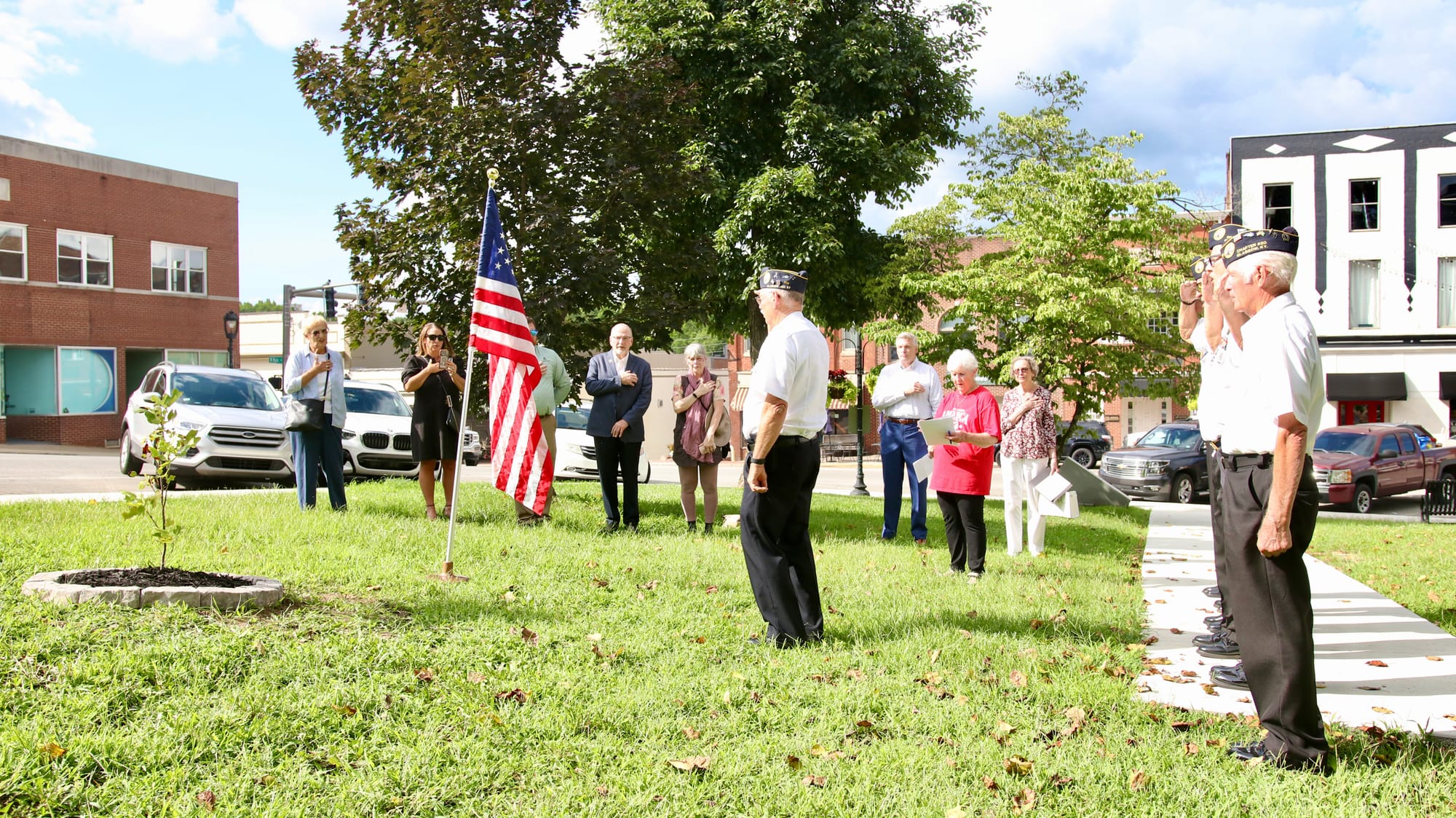
By Wednesday, the young tree had grown a couple of feet and was placed in the ground on the west side of the Barren County Courthouse lawn, where officials hope it will stand for generations.
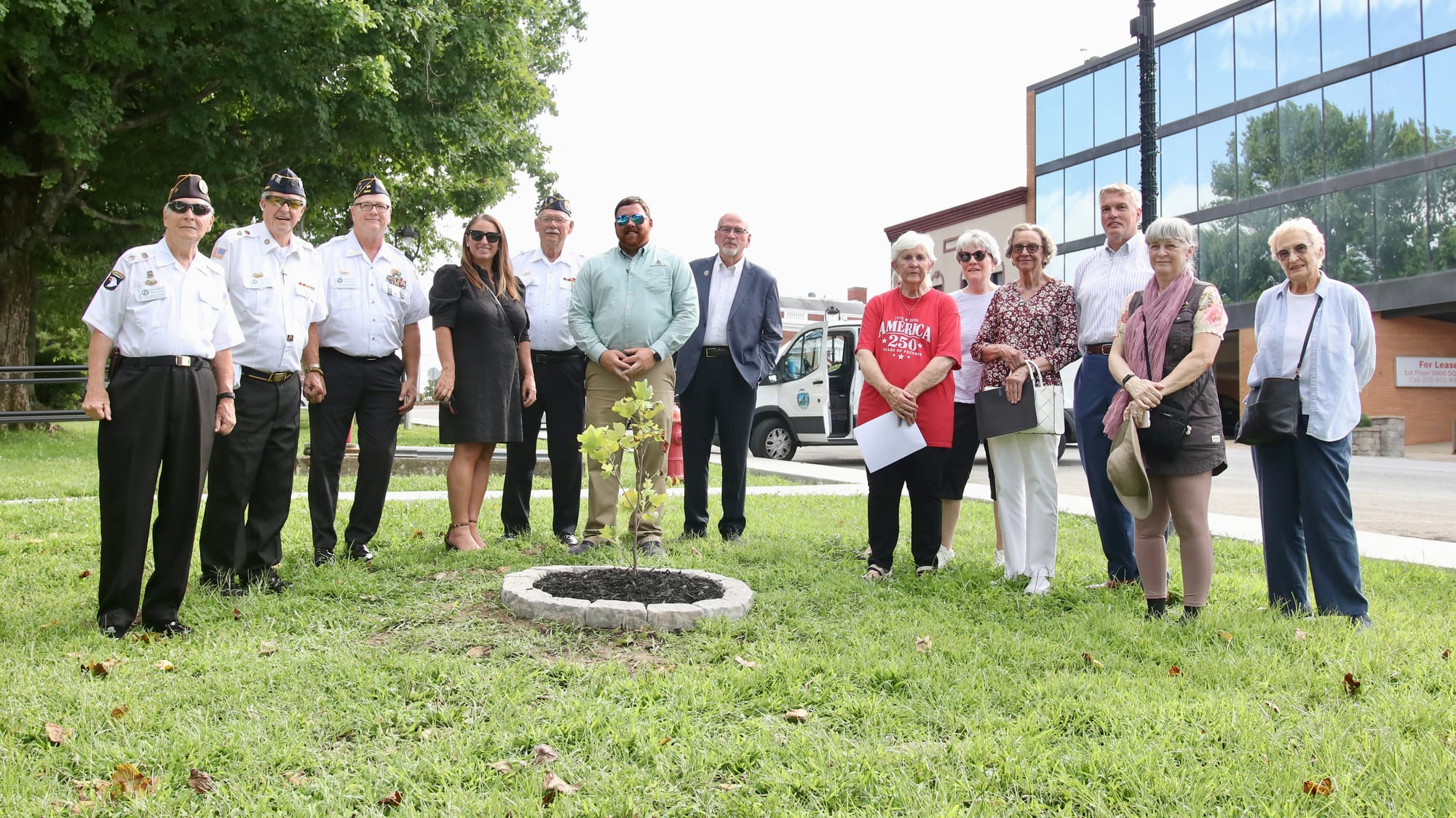
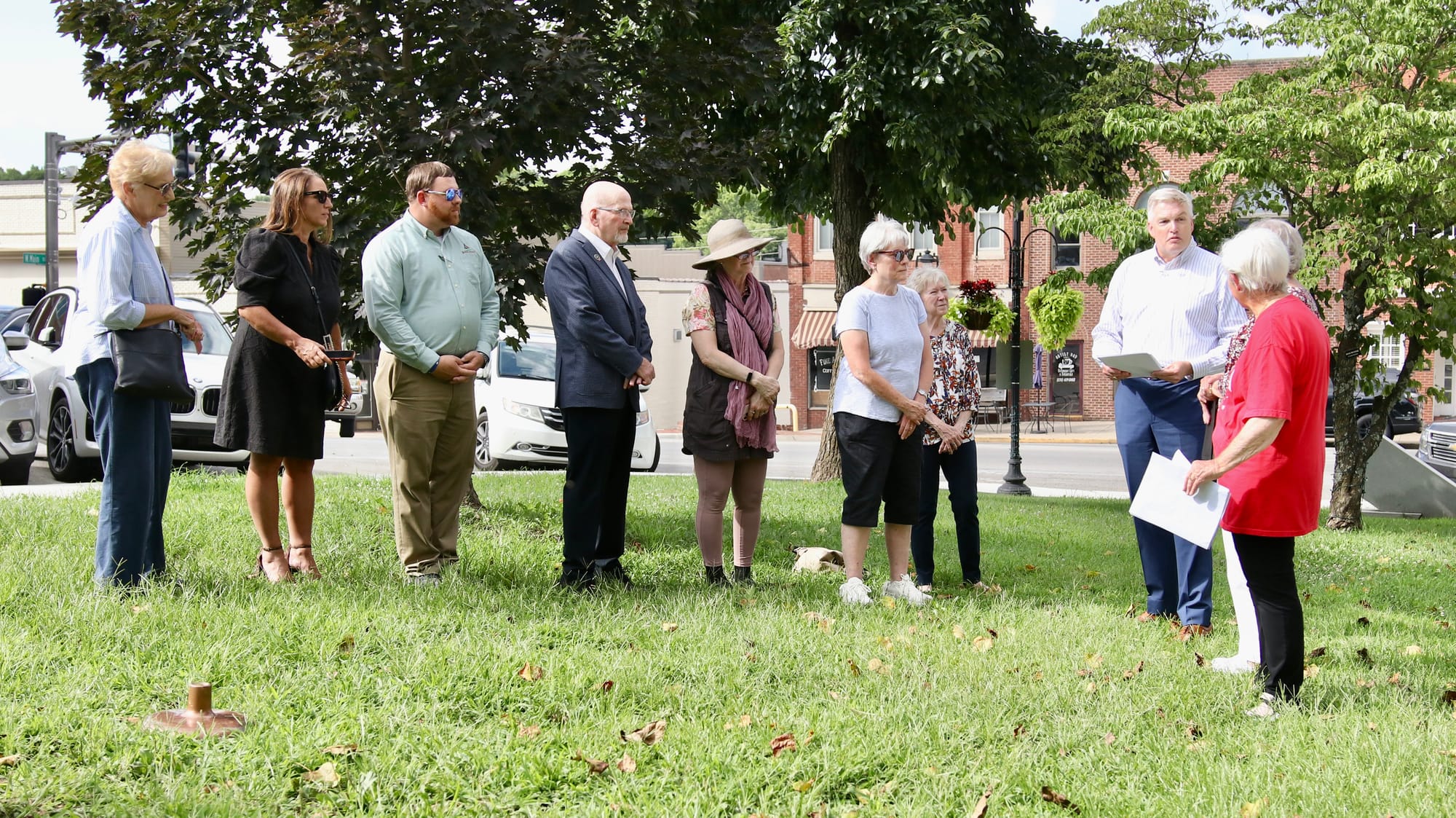
Members of the Edmund Rogers Chapter of the DAR and DAV Chapter 20 joined Glasgow Mayor Henry Royse, Barren County Judge/Executive Jamie Byrd and historian Sam Terry for the brief ceremony.
“In the planting of this tulip poplar tree, we remember the past and honor the men and women who gave their lives to preserve our freedoms and secure our future,” a DAR member said.
The Kentucky DAR, Kentucky Historical Society, Kentucky Division of Forestry and local governments are partnering to plant a tulip poplar in each of Kentucky’s 120 counties to commemorate America’s 250th anniversary and recognize the state’s role in the American Revolution.
Terry explained that many of Barren County’s early settlers were Revolutionary War veterans who chose John Gorin’s offer of 50 acres and a spring as the site for Glasgow’s establishment in 1799.
“While the American Revolution had been over for 16 years when the early settlers began establishing our county, the valiant struggle for independence was still fresh on their minds,” Terry said.
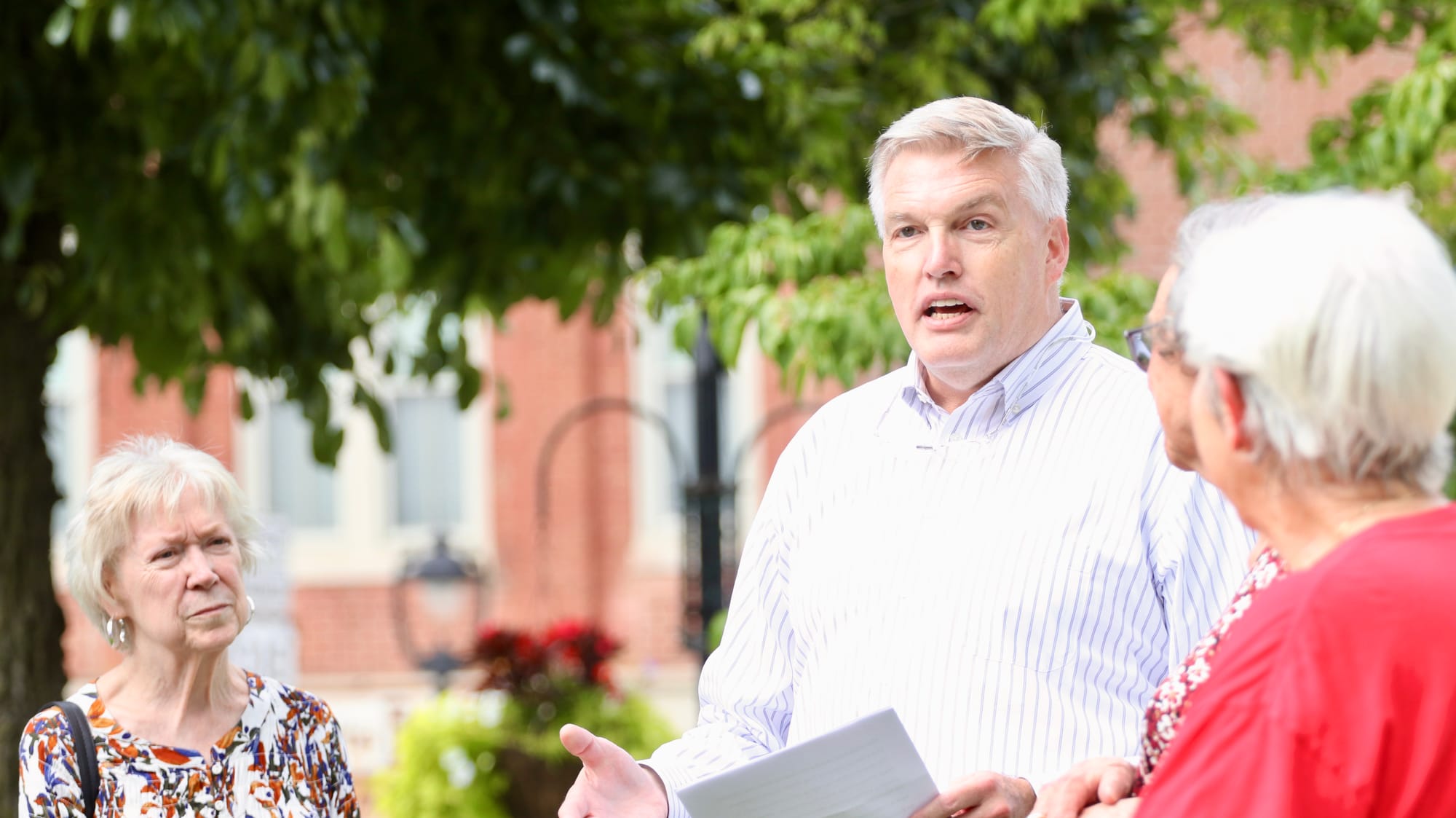
When considering where to plant the tree, local officials selected the courthouse lawn, which Terry said was a fitting choice because the property holds historical significance as the place where Barren County’s founders established the county seat and center of local government.
“It was from this center of the town that Glasgow and Barren County grew and continues to grow,” Terry said.
The courthouse lawn has served as a central gathering place throughout Glasgow’s history, hosting everything from livestock pens and public events to band concerts, homecomings and memorials honoring veterans of American wars, Terry said.
He noted that the lawn has also been home to a bandstand where John Phillip Sousa directed his band, a sulfur well and a burial site for victims of the 1854 Asiatic cholera outbreak.
Terry said Wednesday’s planting continued a long tradition of maintaining and beautifying the courthouse grounds. He noted that Col. B.B. Crump appeared before the Fiscal Court in 1839 with a proposal to enhance the property, which he carried out by planting trees and sowing Kentucky bluegrass around the courthouse.
“Today, we continue that tradition with the Barren County Liberty Tree, a living monument to the American patriots, whose courage, sacrifice, and devotion forged the birth of our nation,” Terry said.
Glasgow also maintains several connections to the American Revolution, particularly through street names such as Washington Street, named for George Washington, and Franklin Street, named for Benjamin Franklin.
From a practical standpoint, Mayor Royse said the tree also replaces one that had to be removed from the east side of the courthouse lawn last year after a limb broke off and nearly struck someone attending a community concert.
“You hate to take a tree down in such a historic place without putting one back, so I’m glad this worked out,” Royse said.
The ceremony lasted about 15 minutes and included brief remarks, a presentation of colors and two prayers.