
Barren County mother claims hemp seizure destroyed business, files federal suit
According to the lawsuit, officials seized the hemp despite documentation and testing that Steadman says showed the crop was legal under federal law.

GLASGOW, Ky. — A Barren County mother has filed a federal lawsuit accusing state and local officials of unlawfully seizing hundreds of pounds of legally grown hemp from her farm in 2020, claiming the action crippled her business and caused years of financial and reputational harm.
Dana Emmitt-Steadman, who filed the lawsuit without an attorney, filed the complaint April 30 in U.S. District Court in Bowling Green against the Kentucky State Police, Barren County Sheriff’s Office, Kentucky Department of Agriculture and several current and former state officials.
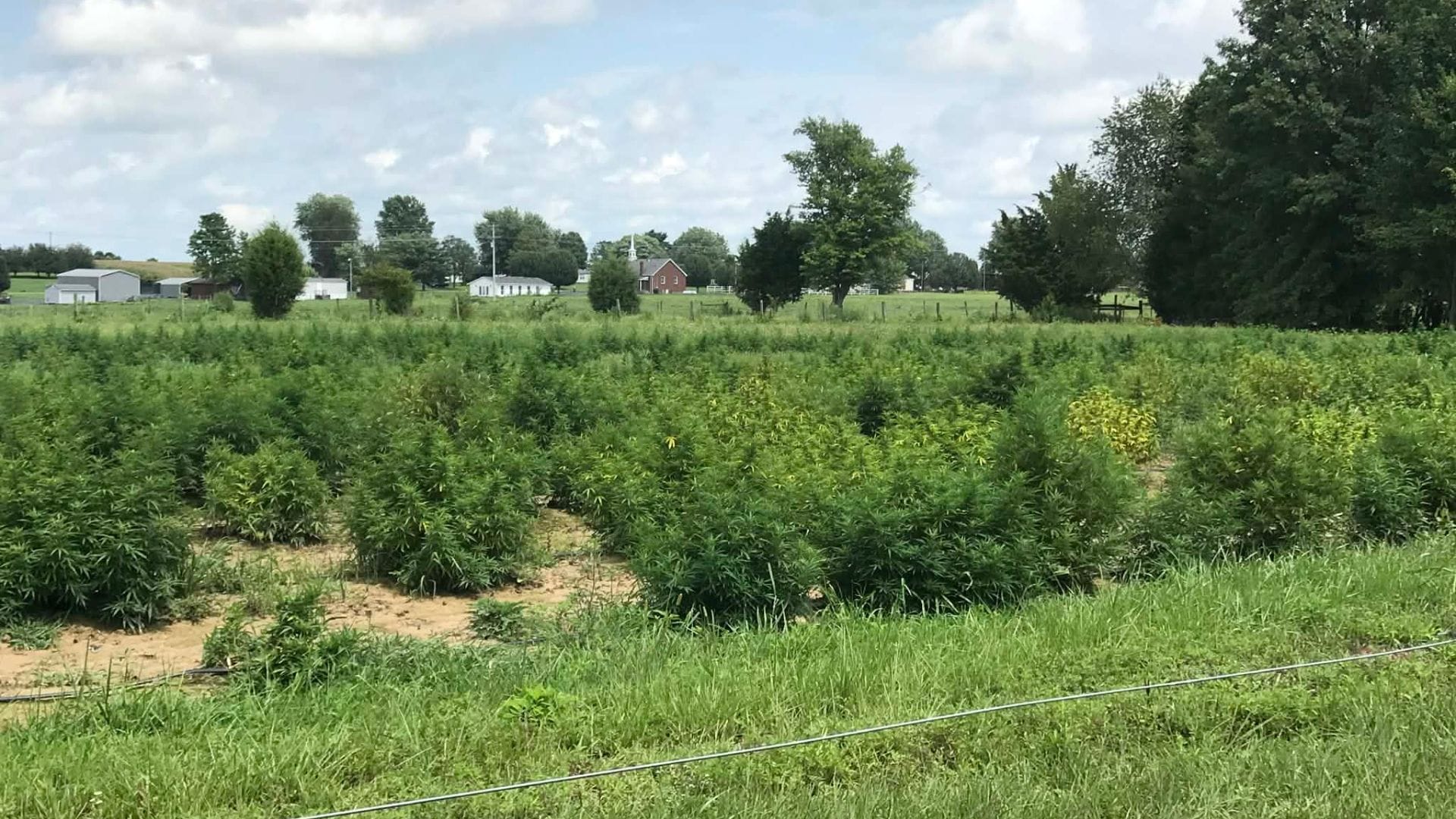
According to the complaint, officers with Kentucky State Police, deputies with the Barren County Sheriff’s Office and representatives of the Kentucky Department of Agriculture executed a warrant at Steadman’s Park City farm on June 11, 2020, and seized approximately 350 pounds of hemp.
Steadman alleges she was operating as a licensed hemp farmer and that her crop complied with state and federal THC regulations under the 2018 Farm Bill.
According to the lawsuit, officials seized the hemp despite documentation and testing that Steadman says showed the crop was legal under federal law.
Steadman, whose son has autism, has long advocated for the legalization and medicinal use of hemp-derived products. She later turned that advocacy into a business, selling medical cannabis products to consumers from her home.

She says the seizure caused severe economic losses, including lost inventory, business income and customers. The lawsuit also alleges that a newspaper article reporting the business had been “shut down” caused lasting reputational damage.
“As a result of Defendants’ actions, Plaintiff lost valuable property, business income, and inventory,” the complaint states.
Steadman further alleges that other cannabis and hemp-related businesses in Kentucky were permitted to continue operating while her business faced enforcement actions and disruption.
The filing also references a 2025 court order that temporarily paused her business operations pending an inspection by the Cabinet for Health and Family Services.
Steadman claims no inspection occurred for roughly two months and says her business never recovered financially after reopening.
The lawsuit seeks more than $600,000 in specified damages, along with punitive damages, attorney fees and court costs.
Since the lawsuit was filed, several defendants have asked the court to dismiss the case, arguing the claims were brought years too late and fail to establish legal liability.
Attorneys representing the Kentucky Department of Agriculture argued that Steadman waited too long to sue, noting that Kentucky’s statute of limitations for civil rights claims is generally one year. Their filing states that the seizure occurred in June 2020, but the lawsuit was not filed until 2026.
“The Plaintiff’s stale action must be dismissed for several reasons,” attorneys for the agriculture defendants wrote.
The agriculture defendants also argued the complaint does not specifically describe actions taken by individual officials and instead broadly groups agencies and defendants together. Their filing states the complaint “does not allege one single fact against any specific KDA Defendant.”
Attorneys additionally argued the Kentucky Department of Agriculture and state officials acting in their official capacities are protected by sovereign immunity under the Eleventh Amendment.
The Barren County Sheriff’s Office made similar arguments in its own motion to dismiss, contending the office itself cannot be sued under federal civil rights law because it is not considered a separate legal entity.
The sheriff’s office also argued that all of Steadman’s constitutional claims accrued at the time of the 2020 seizure and are therefore barred by the statute of limitations.
In its filing, attorneys for the sheriff’s office described the amended complaint as “an all systems failure.”
Detective Robert Walker likewise moved to dismiss the suit, arguing the claims are time-barred and that he is entitled to sovereign immunity. Walker’s filing also states Steadman never alleged criminal charges were filed against her following the seizure.
No rulings have yet been issued on the motions. Court records show responses are due in June, with a 90-day case review scheduled for July 22.