
Communities face key decisions as data center industry expands
Local officials were briefed Wednesday on the rapid expansion of data centers across the country and what it could mean for Kentucky communities as they weigh potential economic benefits against concerns over infrastructure, energy use and local impacts.

GLASGOW, Ky. — As data center development expands across Kentucky and the nation, local government officials are being encouraged to begin discussing how their communities would handle potential projects.
During a webinar hosted Wednesday by the Kentucky League of Cities, the Kentucky Association of Counties and the Kentucky Association for Economic Development, Brian Davis, director of the Louisville Metro Office of Planning, and Brian Howard, executive director of the Owensboro Metropolitan Planning Commission, explained how data centers operate, why companies are building them and what local governments should consider when developing regulations.
Data centers are expanding nationwide
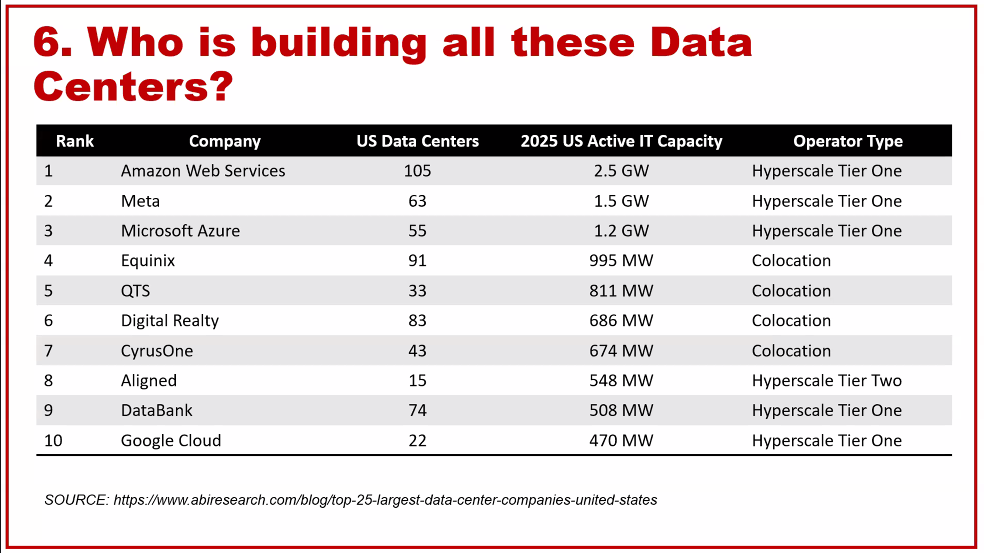
The growth is being driven by increased reliance on cloud computing, remote work, e-commerce, telemedicine and artificial intelligence. Major technology companies are building new facilities to increase capacity, improve redundancy and meet growing computing demands.
“People want to be able to secure their data and have it on the ready, but it has to be secure,” Davis said.
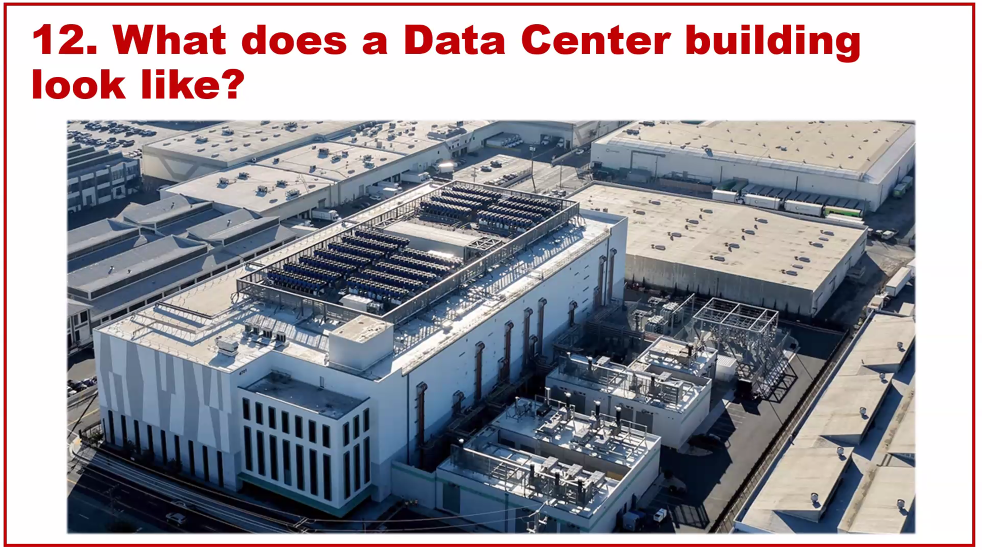
Davis described a data center as a facility that houses the technology needed to build, run and deliver digital applications and services.
The facilities also store and manage the data associated with those systems.
“This definition can vary from community to community,” Davis said.
According to Davis, data centers serve three primary functions: data storage, computational processing and network connectivity.
They maintain large digital repositories designed for reliability and disaster recovery. They also support applications, artificial intelligence workloads and real-time analytics.
“Think about large amounts of data being saved that way,” Davis said.
Inside a data center are rows of servers that run applications and virtual machines.
Storage systems manage large volumes of information, while networking equipment and fiber-optic infrastructure move data throughout the facility and beyond.
To ensure uninterrupted operation, data centers rely on backup power systems and advanced cooling equipment. Additional systems, including fire detection technology, monitoring software and physical security controls, help maintain safety and reliability.
Common types of data centers
Enterprise data centers are owned and operated by organizations to support internal operations.
Colocation facilities lease space and power to multiple customers.
Edge data centers are smaller facilities located closer to end users, reducing latency and supporting technologies such as 5G networks and Internet of Things devices.
Howard said the facilities most people envision are hyperscale data centers.
 Brennan Crain
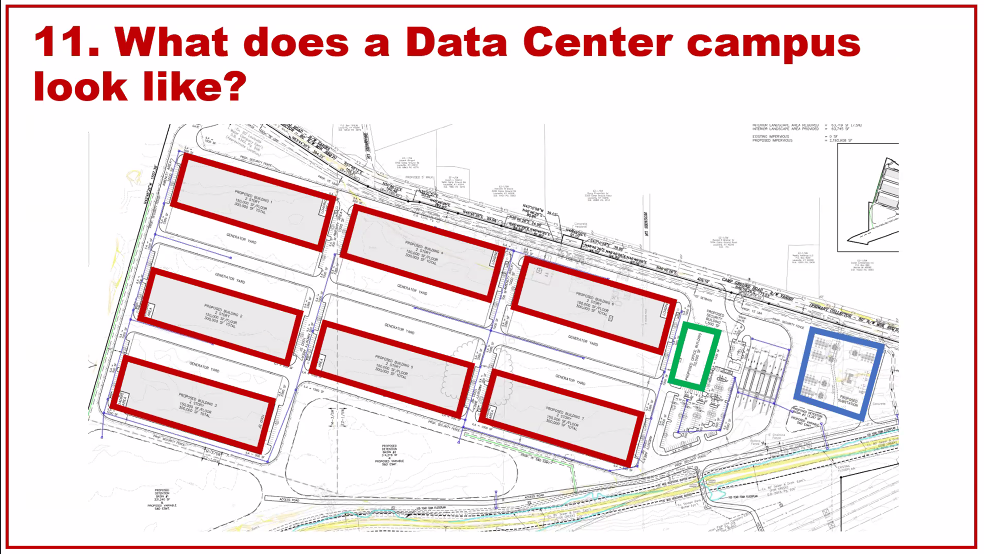
Officials said modern data center campuses typically feature large warehouse-style buildings with few or no windows. Facilities often include generator yards and extensive rooftop cooling and HVAC equipment needed to support around-the-clock operations.
These massive campuses are operated by cloud providers and designed for efficiency, automation and large-scale computing demands.
“By and large, I think this is what people think of right now,” Howard said.
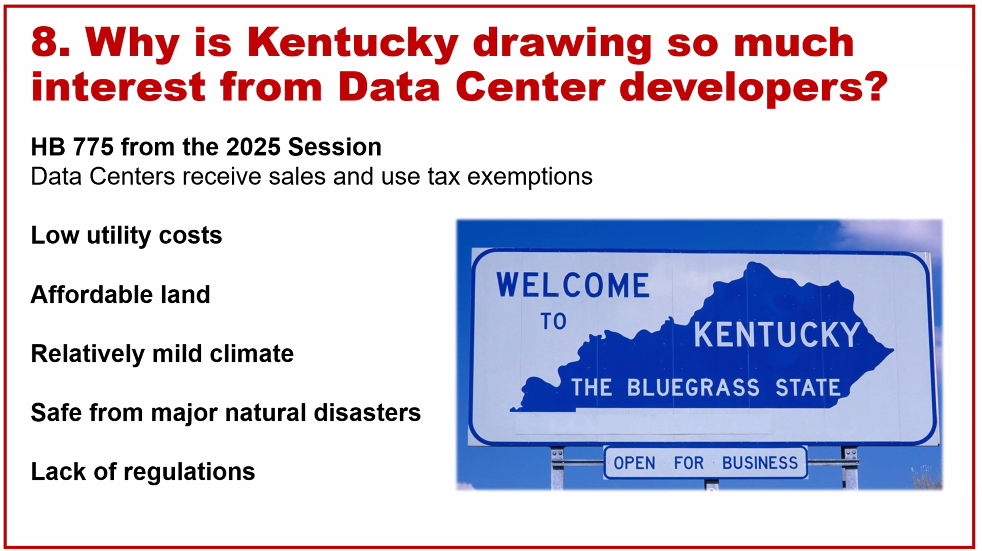
Kentucky has become an increasingly attractive location for data center development because of relatively low utility costs, affordable land, a mild climate, limited exposure to major natural disasters and a favorable regulatory environment.
State incentives also play a role. House Bill 775, passed during the 2025 legislative session, provides sales and use tax exemptions for qualifying data center projects.
“The data center exemptions that were in there were really based upon the size of the county and then then minimum investment that would be required in order to receive those exemptions,” Howard said.
Under the law, developers of qualifying data center projects can receive sales and use tax exemptions based on the population of the county where the facility is located.
Projects in counties with more than 100,000 residents must involve at least $450 million in investment to qualify. The threshold drops to $100 million in counties with populations between 50,000 and 100,000, and $25 million in counties with fewer than 50,000 residents.
Some of those tax exemptions can remain in effect for up to 50 years, Howard said.
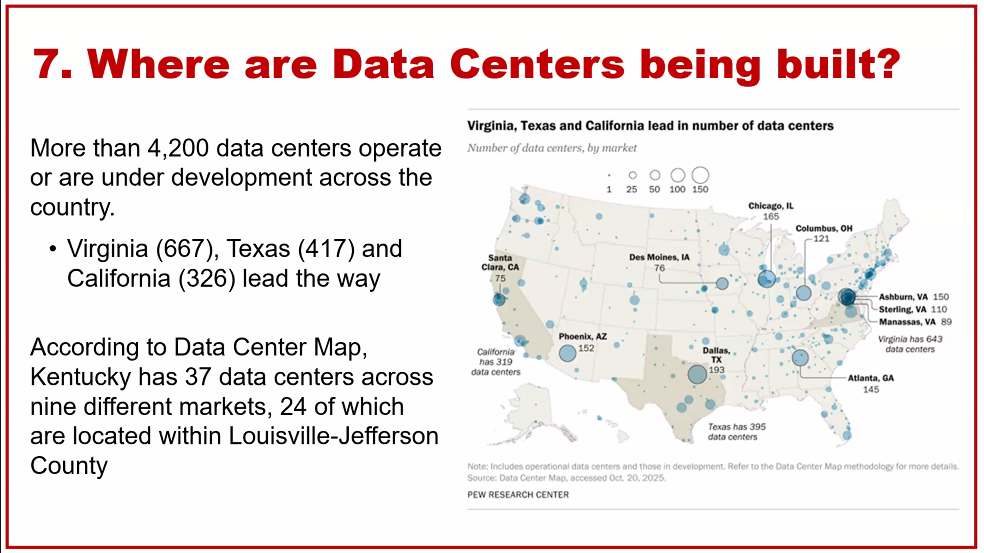
According to Data Center Map, Kentucky is home to 48 data centers across 10 markets. Twenty-four of those facilities are located in Jefferson County.
As interest in data centers grows, local officials across the country are weighing potential benefits against possible drawbacks.
What do supporters and opponents say?
Supporters argue that data centers create a stable tax base through investments in land, buildings and equipment.
They also point to infrastructure improvements, including upgrades to electrical grids and fiber-optic networks.
While data centers typically employ fewer workers than manufacturing facilities, supporters say they create thousands of construction jobs and well-paying careers in engineering, cybersecurity and maintenance.
They also argue that the presence of a major digital hub can help attract additional businesses and investment to a community.
Supporters also argue that the presence of a major digital hub can help attract additional businesses and investment to a community. Companies seeking reliable data storage and processing capabilities may be more likely to locate near robust digital infrastructure.
Some proponents also point to investments in renewable energy and grid improvements associated with modern data center development. Certain facilities have explored ways to capture waste heat generated by operations and redirect it for use elsewhere in the community.
 Liam Niemeyer
Opponents, however, have raised concerns about the industry's demand for electricity and water.
They also cite potential impacts from generator emissions, cooling-system noise, construction traffic and the visual impact of large industrial-scale buildings.
“They want them running all of the time,” Davis said.
The energy requirements associated with data centers are significant.
According to figures presented during the meeting, the International Energy Agency estimated data centers accounted for more than 4 percent of total U.S. electricity consumption in 2024. Demand is expected to more than double by 2030.
Water consumption is also substantial.
Officials said artificial intelligence workloads are a major factor in rising resource demands. AI chips generate significant heat and often require water-intensive cooling systems to operate efficiently.
Water is frequently used in air-chilling systems designed to keep temperatures within acceptable ranges, while backup generators remain on site and ready to provide power during emergency situations.
Officials said data centers directly consumed about 17 billion gallons of water in 2023. Hyperscale facilities are projected to consume approximately 69 billion gallons annually by 2028.
The demand stems largely from servers and artificial intelligence systems that operate continuously and generate significant heat.
Water is often used in cooling systems designed to keep facilities operating safely. Backup generators are also maintained on site to provide emergency power.
“These things are designed to be as efficient and redundant with power,” Davis said.
Officials said many companies are attempting to reduce environmental impacts through renewable energy investments, more efficient hardware, water-saving cooling systems, recycling programs and waste-heat recovery technologies.
Opponents have also expressed concerns about water quality, the localized heat generated by large facilities and the visual impact of warehouse-sized buildings that may appear out of character with surrounding areas.
Construction of hyperscale facilities can also create significant traffic. Howard noted that one Ohio community required a traffic management plan during the construction phase of a hyperscale data center project.
How are they being regulated?
Communities considering data center development are exploring a variety of regulatory approaches.
“City to city and county to county, there isn’t a one size fits all approach to data centers,” Davis said.
Potential regulations include zoning restrictions, conditional use permits, setbacks, building height requirements, landscaping and screening standards, noise controls, generator regulations and limits related to energy and water consumption.
“With growth and technology in the industry constantly evolving, zoning approaches to handling the data centers are evolving as well,” Davis said.
Officials pointed to Mason County as one example of a community developing data center regulations.
The Mason County Joint Planning Commission held a two-part public hearing in December 2025 to gather feedback on proposed zoning amendments.
The commission made recommendations to Mason Fiscal Court on Feb. 4, 2026.
The fiscal court formally adopted an amended version of those recommendations later that month.
 Brennan Crain
Davis encouraged local officials to begin discussing how data centers fit into their communities before projects are proposed.
“These are local level decisions that should be made with input from lots of folks, lots of stakeholders, and really, the conversation needs to start now,” Davis said.
Officials said communities considering data center regulations may also evaluate lighting standards, buffering and screening requirements, low-impact development practices and energy-efficiency measures.