Barren County tax hearing raises questions about poverty, seniors and rising values
Three citizens spoke during the hearing, including a former candidate and a current candidate.
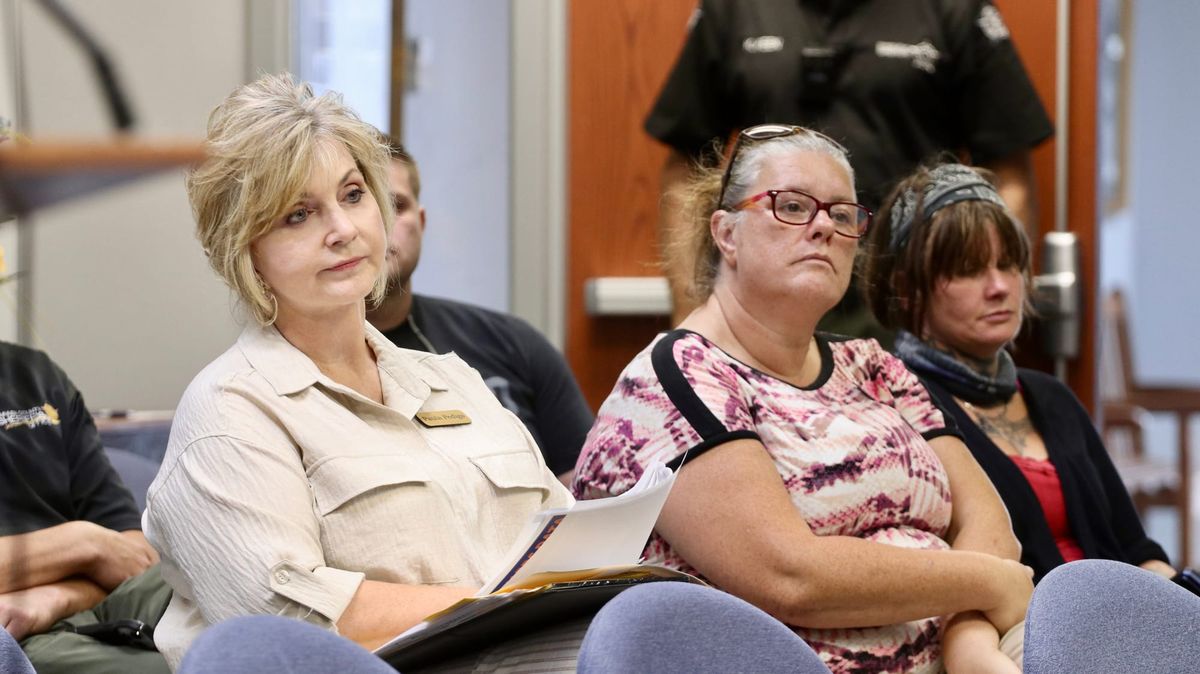
GLASGOW, Ky. — Nine citizens and a few Barren County government employees attended a Friday afternoon public hearing on the county’s proposed property tax rate.
Magistrates on the Administrative & Budget Committee proposed earlier this week keeping the rate at 12.2 cents per $100 of assessed value.
The hearing was required because the proposed rate is higher than the state’s compensating rate, which is calculated to bring in the same amount of revenue as the previous year.
Barren County’s compensating rate is 12.0 cents per $100 this year based on the latest property assessments. Magistrates could lower the rate to 12.0 cents or raise it to 12.4 cents per $100. To go above 12.4 cents, they would have to hold a recall vote.
No discussions have been held about raising the rate above 12.4 cents.
What happened at the hearing?
When Judge/Executive Jamie Byrd opened the hearing and asked if anyone had comments, no one initially responded. Three citizens ultimately spoke during the roughly 10-minute hearing.
Sheila Steenbergen asked about the assessment of agricultural land. Officials explained that agricultural-use values are set through state guidelines and are not determined by the county.
Paula Pedigo, who most recently ran for judge/executive, then spoke, saying she would offer a comment after no one initially volunteered.
Pedigo cited an Aug. 5 Barren River Area Development District steering committee study that found 19.3% of Barren County residents live below the poverty level. She said the federal poverty threshold for one person is $15,960 per year and estimated that about 8,802 county residents fall below the poverty level.
“When you look at our tax structure, we start adding it all together — whether it’s ambulance, real estate, Barren County school tax rate, county real estate, the extension real estate, the health real estate, library real estate, the city, the volunteer fire department, and the state real estate tax — it’s pretty burdensome on our community,” Pedigo said.
Pedigo said the county should consider lowering the tax rate as property assessments increase.
“As assessments go up, you’re bringing in more money, even with a reduced rate,” she said.
She also suggested the Barren County Property Valuation Administrator’s Office study property assessments to ensure they are consistent across the county.
Magistrate Tim Coomer acknowledged that property assessments have increased in recent years.
“They have gone up, but if you built a house in 2019, before COVID, and one now, I mean, the appraisals are going to go up. Everything’s worth more,” Coomer said.
According to the PVA office, Barren County property values increased by about $172 million from 2025 to 2026, slightly less than the $176.8 million increase reported to county officials by the Kentucky Department of Revenue. A PVA spokesperson said the figures can vary from year to year between the two offices.
The discussion then turned to whether the poverty figures were directly connected to the property tax burden.
Coomer asked Pedigo whether her figures included people who own property and pay property taxes. Pedigo said that information was not included in the research, but pointed to other statistics involving food insecurity and ambulatory difficulties in the county.
“Poverty ties into property taxes,” she said.
 Brennan Crain
Magistrate Marty Kinslow questioned how the poverty statistics related to the proposed tax rate.
“I could make the assumption that you’re encouraging that we should raise the rates on property owners to help the poor. Is that the stance you’re wanting to make? If not, why did you bring it up? Why is it relevant?” Kinslow said.
“It’s relevant because we have a high level of poverty. It’s relevant because we have a PVA who’s going to increase the value of property...” Pedigo said.
Kinslow interjected before Pedigo finished.
“The property tax is levied against property owners, not the poor,” Kinslow said. “You’re confusing one with the other, Ms. Pedigo.”
“Excuse me, you asked me a question. Please allow me to finish,” Pedigo said.
It was unclear how many of the people included in the poverty statistics own property or pay property taxes.
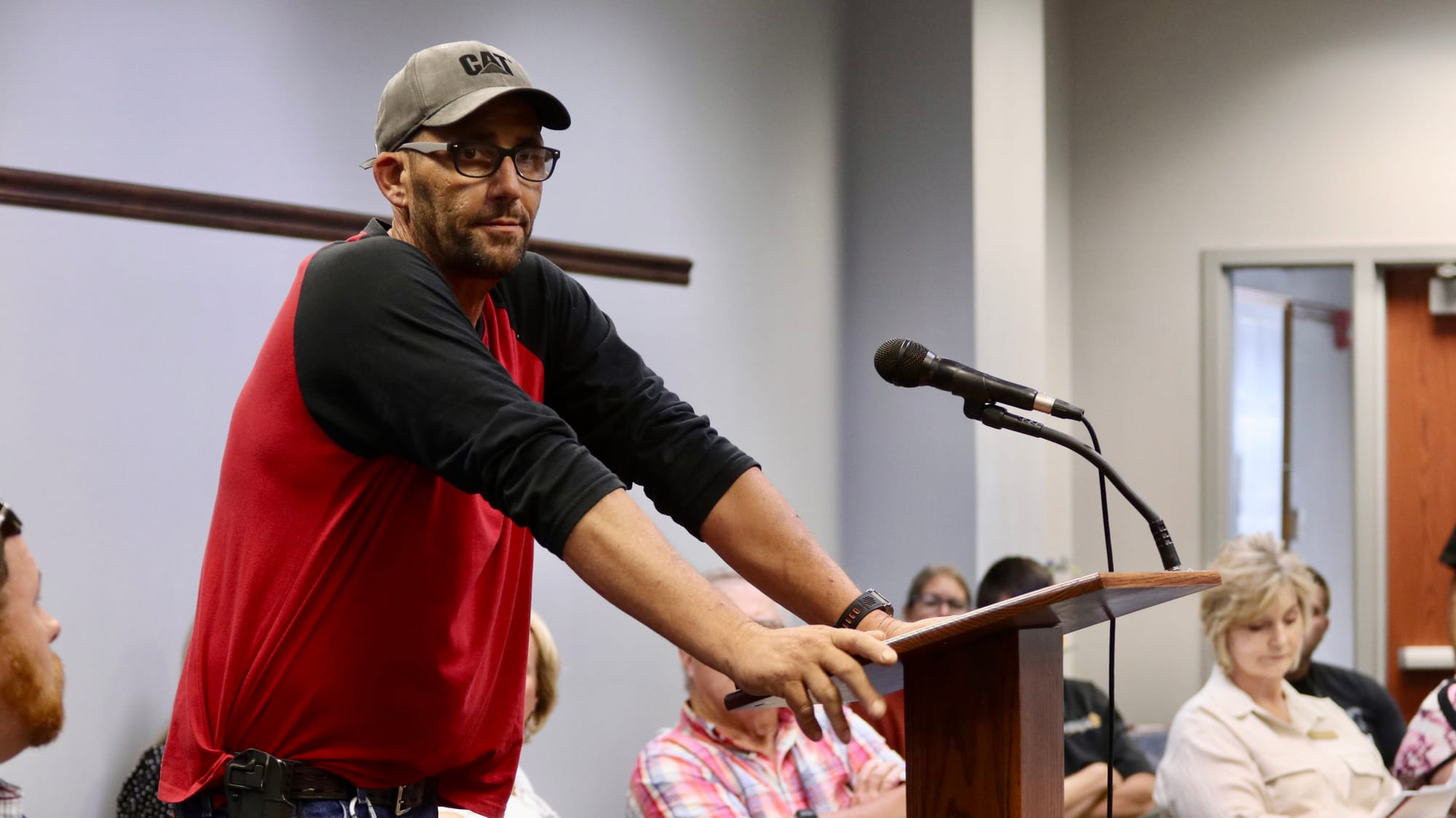
Bob Miller, who is running for Glasgow mayor, asked whether the county could do more to reduce the tax burden on older residents. He suggested forgiving property taxes after a certain age.
“Let them enjoy their last years,” Miller said.
Byrd said the county’s ability to provide additional property-tax exemptions is limited by state law. Coomer noted that the Homestead Exemption already provides a property tax break for qualifying homeowners age 65 and older.
“What can we do as a county or city to help even more?” Miller asked.
Byrd pointed to community groups that provide financial assistance, including Community Relief.
With no other comments, the hearing adjourned about 10 minutes after it began.
Magistrates’ next step is to formally adopt a tax rate. The committee has proposed 12.2 cents per $100, and Byrd said the rate must be submitted to the state by the end of September.